Flower Gardening Basics
Plant Hardiness Zones Explained for Flower Gardeners
What the zone numbers on a plant tag mean, how to find your own zone, and what zones cannot tell you about heat, humidity, soil and frost dates.
Grow a Beautiful Garden Full of Flowers
Clear beginner guides to planning beds, planting, and caring for annuals and perennials, with advice that respects local climate differences.
New to flower gardening? Read these four guides in order.
A plain orientation for your first flower bed: the four decisions that shape most results (sun, soil, climate and plant type) and a simple first-season sequence to follow.
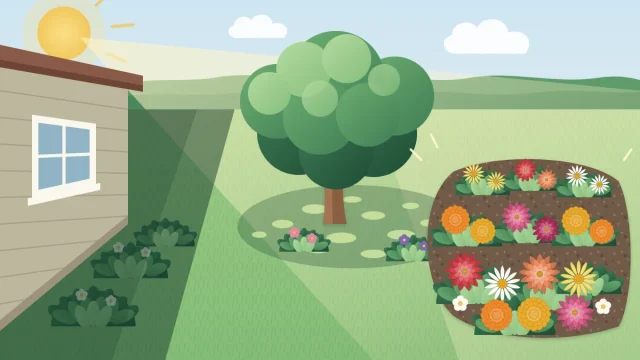
Learn what full sun, part shade and shade mean on a plant tag, and how to map the hours of direct sun in your own yard with nothing more than paper, a pencil and one clear day.
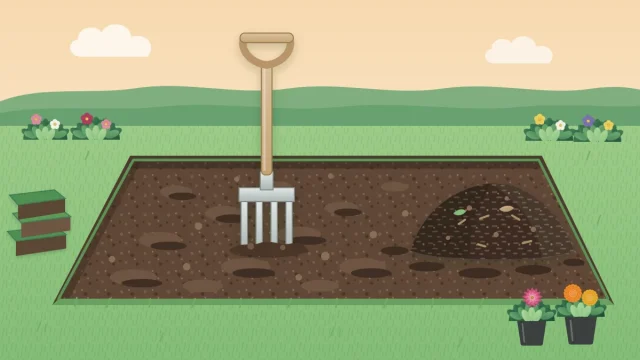
Turn lawn or tired ground into a bed where flowers root well: test the soil's texture and drainage, clear the grass, loosen the ground, mix in compost and let it settle before you plant.
Annuals live one season and flower for a long stretch; perennials return for years with a shorter show. Here is what the labels mean, why they change with climate, and how to use both in one bed.
Sun, soil, hardiness zones and frost dates: the ideas the rest of the guides build on.
What the zone numbers on a plant tag mean, how to find your own zone, and what zones cannot tell you about heat, humidity, soil and frost dates.
Annuals live one season and flower for a long stretch; perennials return for years with a shorter show. Here is what the labels mean, why they change with climate, and how to use both in one bed.
Turn lawn or tired ground into a bed where flowers root well: test the soil's texture and drainage, clear the grass, loosen the ground, mix in compost and let it settle before you plant.
Learn what full sun, part shade and shade mean on a plant tag, and how to map the hours of direct sun in your own yard with nothing more than paper, a pencil and one clear day.
Profiles and pick-lists of individual flowers, with the conditions each one prefers.
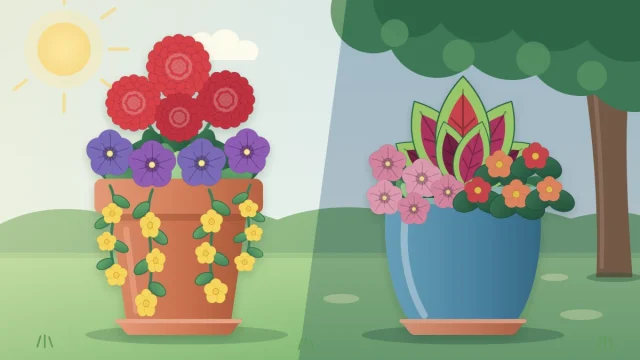
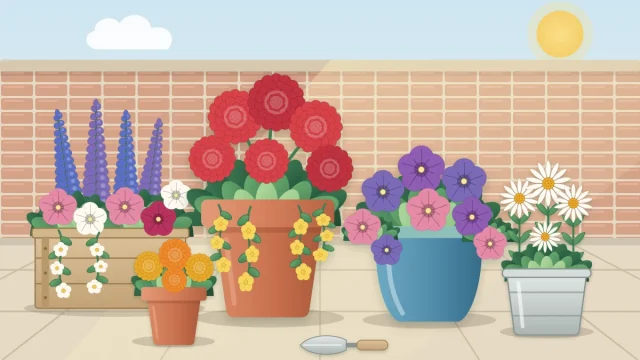
A pick-list of container flowers sorted by light, with each plant's habit, its preference for heat or cool weather and one care note, plus how climate and season change the list.
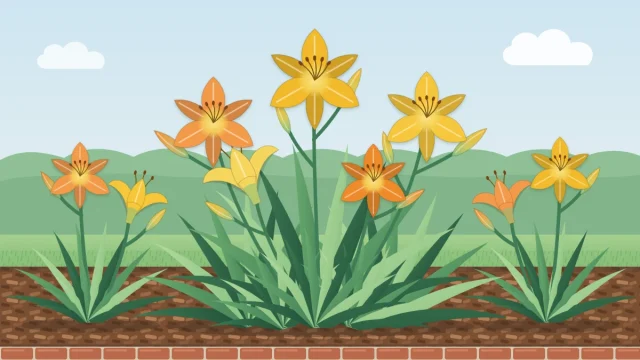
A plain guide to daylilies: choosing foliage types for your climate, sun and soil, planting depth, summer tidying, when to divide and an important caution for cat owners.
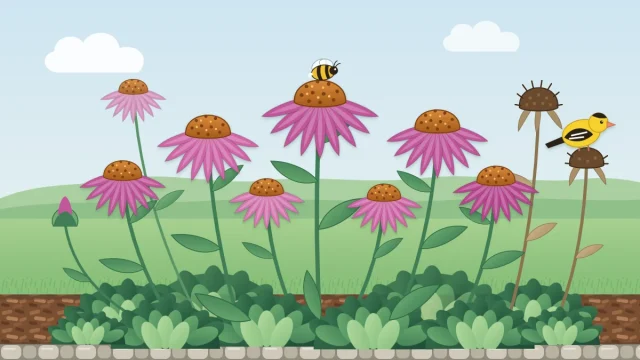
How to grow purple coneflower in a sunny bed: where it is hardy, the sun and drainage it needs, planting, first-season watering, deadheading and when to leave the seed heads.
Nine widely grown perennials for sun and shade, with the light, bloom season, size and approximate hardiness zones for each, plus what to check before you buy.
Planning beds and borders: layout, height, color and bloom time through the season.
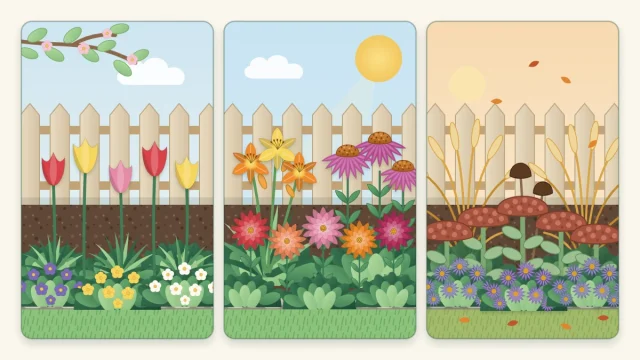
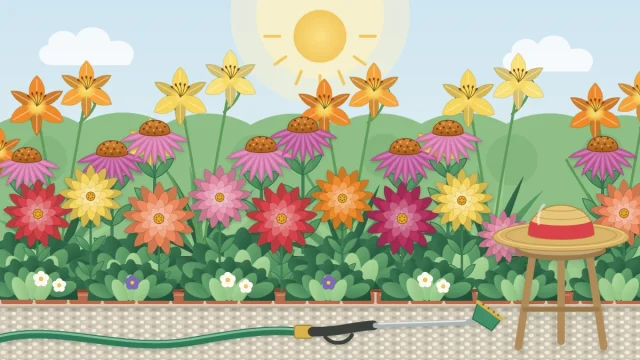
Learn how to plan a flower bed that has something open from spring to fall: chart what you grow by bloom period, find the gaps, and fill them with plants and simple techniques.
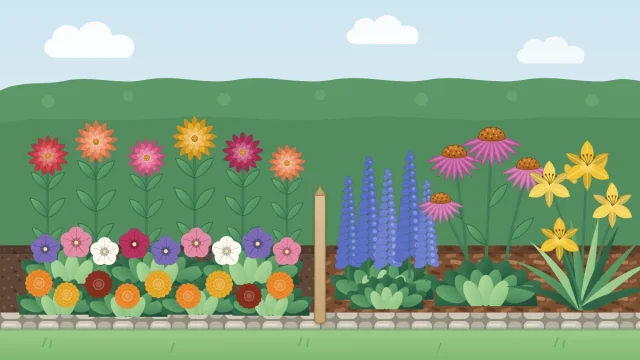
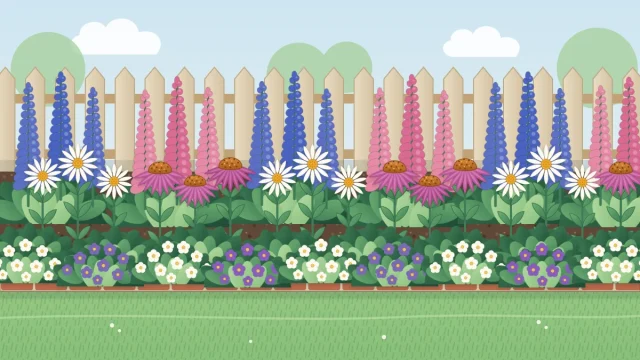
Plan a long bed along a fence, wall or path: how deep to make it, how to layer plants by mature height, how to group and repeat them, and which edge keeps the lawn out.
Use the color wheel to plan a harmonious bed: calm analogous schemes, lively complementary pairs, buffers of white and green, and a simple method for choosing your palette.
A simple way to plan a first flower bed: read the site, pick a shape you can reach into, repeat a few plants in drifts, contrast shapes and sketch it to scale before you buy.
Sowing seed, setting out transplants and planting perennials, timed around your local frost dates.
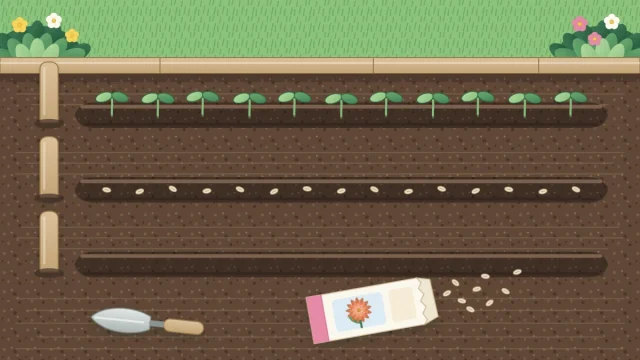
A step-by-step guide to direct sowing: which flowers suit it, how to time it by frost dates, how to prepare a seedbed, sow at the right depth, keep it moist and thin the seedlings.
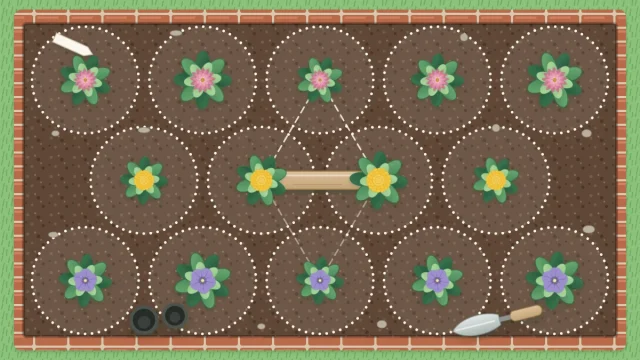
Understand what the spacing on a plant tag means, why crowding causes problems later, and how variety, climate and soil change the right distance between flowers.
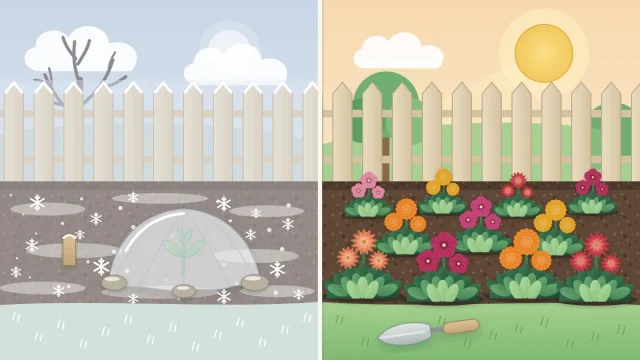
No single planting date fits every garden. Learn how to use your local frost dates, soil temperature and the type of plant to decide when flowers can go in the ground where you live.
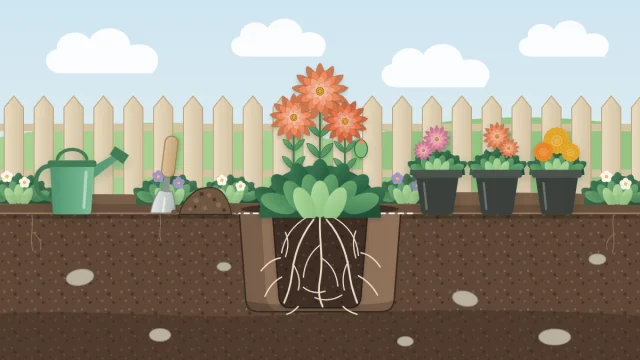
Get nursery pots and cell packs into the ground the right way: what to do before planting, seven clear steps from hole to first watering, and how to care for transplants while they root in.
Watering, feeding, mulching, deadheading and dividing, and what to check when a plant struggles.
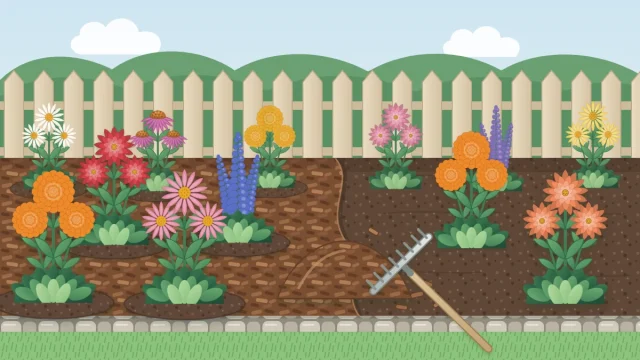
Find out which mulch suits your flower bed, how deep to spread it, when to apply it in your climate, and how to keep it away from stems and crowns so plants stay healthy.
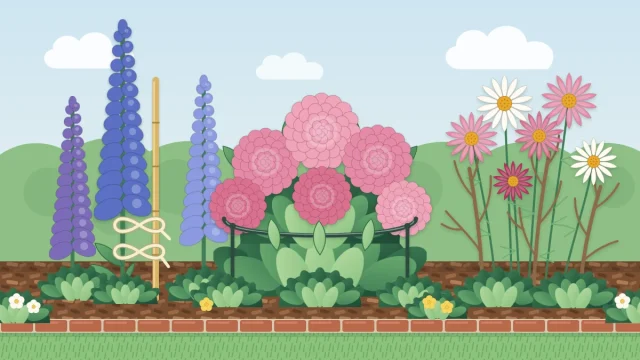
Stop tall and heavy-headed flowers from flopping: how to grow sturdier plants, which support suits which plant shape, and how to set stakes, hoops and twine early so they stay hidden.
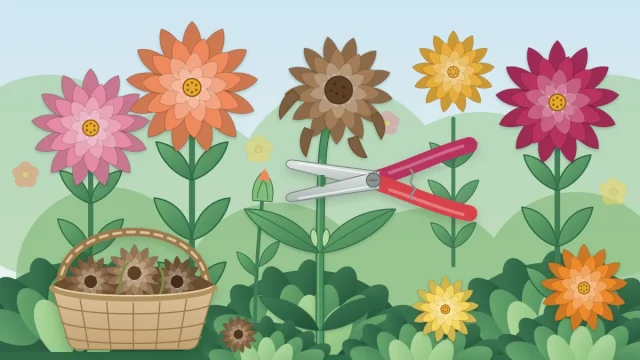
A clear guide to removing faded blooms: where to cut, three methods for different plant shapes, which flowers respond, which do not need it, and when to leave seed heads standing.
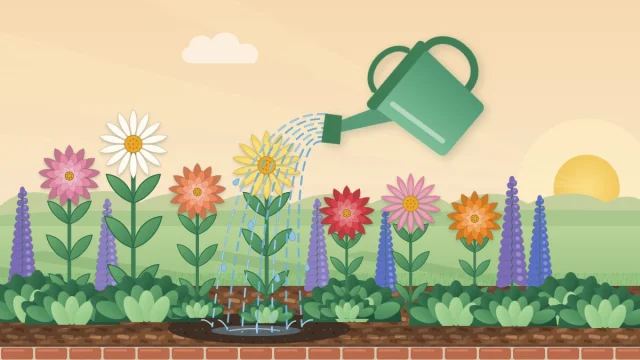
Learn to water by need instead of habit: how to check soil moisture, why deep watering at the base in the morning works, how to gauge the amount, and how to spot too much water.
Step-by-step how-tos for single garden jobs, each with a list of what you need.
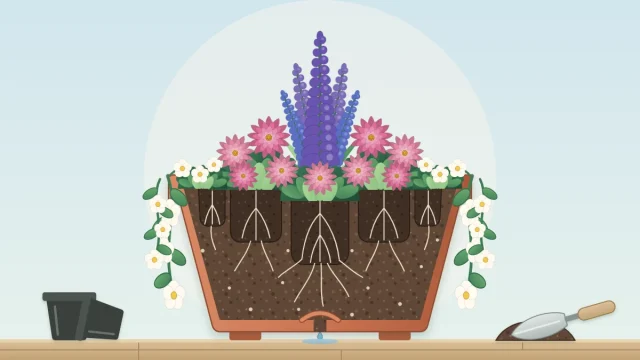
From an empty pot to a full, balanced planting: how to choose a thriller, fillers and spillers, fill the pot, arrange and plant in the right order, and care for the container afterward.
Find out which mulch suits your flower bed, how deep to spread it, when to apply it in your climate, and how to keep it away from stems and crowns so plants stay healthy.
Stop tall and heavy-headed flowers from flopping: how to grow sturdier plants, which support suits which plant shape, and how to set stakes, hoops and twine early so they stay hidden.
A clear guide to removing faded blooms: where to cut, three methods for different plant shapes, which flowers respond, which do not need it, and when to leave seed heads standing.
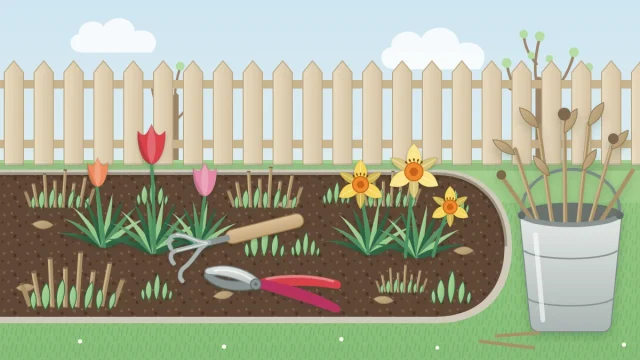
What to pull, what to cut back and what to leave standing after frost, plus watering, bulb planting, winter mulch, lifting tender tubers and storing tools, with notes for mild-winter climates.
A simple routine for the hot part of the year: a regular walk-through to check soil moisture, deadhead, weed, inspect leaves and tie in stems, plus how to read heat stress and tired plants.
A spring task list organized by signals, not dates: what to do while the ground is cold, when the soil is workable, around your last frost date and once nights are mild.
From an empty pot to a full, balanced planting: how to choose a thriller, fillers and spillers, fill the pot, arrange and plant in the right order, and care for the container afterward.
A pick-list of container flowers sorted by light, with each plant's habit, its preference for heat or cool weather and one care note, plus how climate and season change the list.
No bed? Flowers grow well in pots if you choose a container that drains, fill it with potting mix and match plants to your light. Here is what changes when roots live in a pot.
Every guide is listed on one page, from planning a bed and choosing annuals and perennials to planting, care and containers. All of them are free to read, with no sign-up needed.