Fall Flower Garden Cleanup and Winter Preparation
What to pull, what to cut back and what to leave standing after frost, plus watering, bulb planting, winter mulch, lifting tender tubers and storing tools, with notes for mild-winter climates.
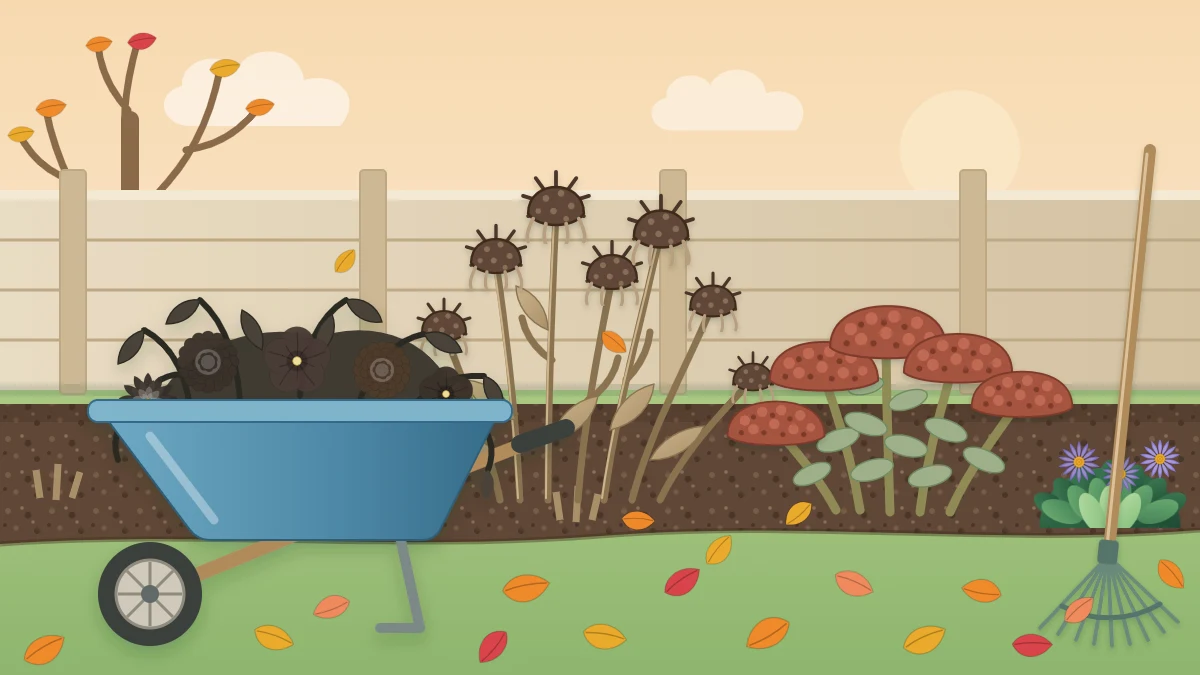
The first hard frost changes a flower bed overnight. Annuals that were blooming the day before hang black and limp, perennials start to yellow, and it is tempting to cut everything to the ground and be done. A good fall flower garden cleanup is more selective than that.
Some plants should go, some should stay standing until spring, and a few jobs done now protect the garden through winter. The timing follows frost and freeze, not the calendar, and how much of this applies depends on the climate you garden in.
Let Frost and Freeze Set the Schedule
Three events matter: the first fall frost, which ends tender plants; the gradual cooling of the soil afterward; and, in cold regions, the point at which the ground begins to freeze. Each one triggers different tasks. Your first frost date is an average, so the real one may come earlier or later in any given year. To see how your winters compare with other places, read about plant hardiness zones.
After Frost Blackens the Annuals
Tender annuals such as zinnias, marigolds and impatiens will not recover from a killing frost.
- Pull healthy plants, shake the soil from their roots and add them to the compost pile.
- Bag and discard anything that had disease during the season, such as leaves coated in a powdery film or covered in spots. Home compost often does not get hot enough to break down disease organisms.
- If you like volunteer seedlings, leave a few seed heads of self-sowing annuals in place.
- Empty summer containers, or replant them with cool-season flowers where the climate allows.
Perennials: What to Cut and What to Leave
You do not need to clear-cut a perennial bed in fall. Sort plants into two groups instead.
| Cut back in fall | Leave until spring |
|---|---|
| Plants that had disease or heavy pest problems this year | Sturdy stems and seed heads, such as coneflower and tall sedum |
| Plants that collapse into mush after frost, such as hostas and daylilies | Ornamental grasses and plants that look good in frost or snow |
| Anything flopping over paths or smothering neighbors | Plants of borderline hardiness, whose old stems help protect the crown |
Standing stems do several jobs. Seed heads feed birds, hollow stems and leaf litter shelter overwintering insects, and the old growth traps snow and insulates the crown. Gardeners in snowy, cold regions often leave more standing for that reason. When you do cut, leave a few inches of stem above the crown and put diseased material in the trash.
Iowa State University Extension and Outreach gives a similar approach in its fall garden tasks; treat its timing as specific to Iowa.
Weed and Keep Watering
Weed thoroughly before winter. Many weeds germinate in cool weather and sit as small rosettes ready to race ahead in spring, and perennial weeds are easier to dig out while the soil is moist and beds are open.
Do not put the hose away at the first frost. If the season is dry, keep checking the soil a few inches down and water when it is dry there, right up until the ground freezes. Perennials, and especially anything planted this year, go through winter in better shape when their roots are not parched.
Plant and Divide Before the Ground Freezes
Fall is planting time for spring-flowering bulbs such as tulips and daffodils. Plant them once the soil has cooled but well before it freezes, so they can root. Most need a long cold period to bloom, so in mild-winter climates look for bulbs suited to your region or ask locally which ones perform.
Early fall is also a good time to plant perennials and to tackle dividing perennials that bloom in spring or early summer. The key is to finish several weeks before the ground freezes, giving roots time to establish. Late divisions in cold regions are prone to being pushed out of the soil as it freezes and thaws.
Winter Mulch and Tender Bulbs
In cold-winter regions, a winter mulch protects perennial crowns, particularly new plantings. Its purpose is to keep the soil evenly cold, not warm, so that roots are not heaved up by repeated freezing and thawing. Apply it after the ground starts to freeze. Use a loose material such as straw, pine needles or shredded leaves; whole leaves can mat down and smother crowns. More detail is in mulching flower beds.
Dahlias, cannas, gladiolus and other tender bulbs and tubers do not survive in ground that freezes. Where it does, lift them after frost blackens the foliage: cut the stems down, dig carefully, let the clumps dry for a day or two and store them somewhere cool, dark and frost-free. Where the ground does not freeze, they can often stay in place in well-drained soil.
Good to know
Whether a perennial needs winter protection depends on the variety and on your hardiness zone. Confirm on the plant tag where it is hardy, and remember that wet winter soil can harm crowns as much as cold does.
If Your Winters Are Mild
In mild-winter climates, fall is less a shutdown than a fresh start. As summer heat eases, it becomes a prime planting season for cool-season flowers such as pansies, violas, snapdragons and sweet alyssum, which can bloom through winter and into spring. Cleanup still matters: remove spent summer annuals, weed, refresh mulch and cut back anything diseased. Heavy winter mulch and lifting tender bulbs are usually unnecessary where the ground does not freeze.
Tools, Supports, Pots and Notes
Finish with the equipment, so everything is ready when growth returns:
- Clean soil from tools, dry them and sharpen blades before storing.
- Pull up stakes, rings and cages, brush them off and store them dry.
- Drain hoses and bring them under cover before hard freezes.
- Empty terracotta and ceramic pots and store them dry or upside down; damp mix expands when it freezes and can crack them.
- Label anything you may not recognize as bare stems in spring.
Then write a few notes while the season is fresh: what bloomed well, where the gaps were, which plants need dividing or moving, and what you want more of. Those notes are the first item on the spring flower garden checklist.
Tip
Rake leaves off the lawn and shred them with a mower. Shredded leaves make a free mulch for beds and a useful addition to the compost pile.
Frequently asked questions
Should I cut back all my perennials in fall?
No. Cut back plants that had disease and those that turn to mush after frost, and leave sturdy stems and seed heads standing until spring. They feed birds, shelter overwintering insects and help protect the crown. In cold, snowy regions gardeners often leave even more in place.
When should I put down winter mulch?
In cold-winter regions, wait until the ground has started to freeze. The aim is to keep soil steadily cold so that freezing and thawing do not push roots out of the ground. Mulching too early can keep soil warm and wet. In mild-winter climates a heavy winter mulch is usually not needed.
Can frosted annuals go in the compost?
Healthy ones can. Shake off the soil and chop thick stems so they break down faster. Plants that showed disease during the season are better bagged and put in the trash, because a home compost pile often does not heat up enough to destroy the organisms involved.