Spring Flower Garden Checklist: What to Do as Growth Returns
A spring task list organized by signals, not dates: what to do while the ground is cold, when the soil is workable, around your last frost date and once nights are mild.
Spring does not arrive on the same day everywhere. In one region the ground is still frozen while, a few hundred miles away, the first perennials are already in leaf. A spring flower garden checklist built on calendar dates is bound to be wrong for somebody.
This one is built on signals instead: what the soil, the shoots and the forecast are telling you. Work through the four stages in order, at whatever pace your climate sets, and you will do the right jobs at the right moment.
Read the Signals, Not the Calendar
Four signals mark the season’s progress: the ground thaws, the soil dries enough to work, your average last frost date passes, and nights become reliably mild. Each one opens a new set of tasks. The frost date is the least dependable of the four, because it is an average, not a promise; a late cold snap can follow it. The guide to when to plant flowers explains how to find your frost dates and how to use them.
While the Ground Is Still Cold or Frozen
There is little to do in the beds themselves, and that is fine. Stay off frozen or soggy ground and use the time to get ready.
- Check tools and hoses. Clean and sharpen pruners, tighten loose handles, and look over hoses, nozzles and watering cans for cracks and leaks.
- Take stock of supplies. Count stakes, ties, plant supports, pots and labels so that you are not hunting for them later.
- Review last year. Note the gaps, the plants that outgrew their space and the weeks when nothing bloomed, then plan what to add.
- Arrange a soil test if you have not had one recently, so results arrive before planting.
When the Soil Is Workable and New Shoots Appear
Squeeze a handful of soil. If it forms a sticky ball that holds its shape, it is too wet; if it crumbles when you poke it, you can begin. Working or walking on wet soil compacts it, squeezing out the air that roots need, and the damage lasts.
Clear winter debris gradually
Resist stripping the beds bare on the first warm afternoon. Hollow stems and leaf litter shelter overwintering insects, including many pollinators, and leaving some of it in place until temperatures have warmed gives them time to emerge. A commonly given rough guide is to wait until days have stayed above about 50°F (10°C) for a stretch. Start with matted leaves that are smothering emerging shoots, and leave the rest a little longer.
Cut back, weed and edge
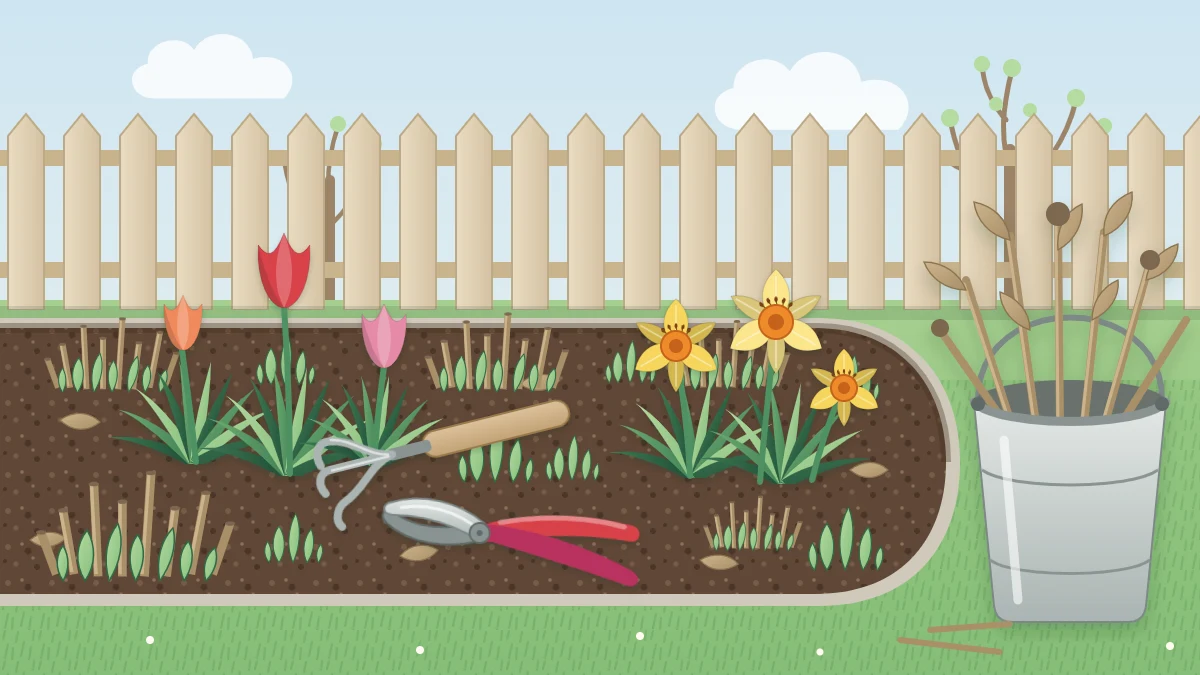
- Cut last year’s perennial stems down to a few inches above the crown, taking care not to snip the new growth at the base.
- Pull early weeds while they are small and the soil is moist.
- Re-cut bed edges with a spade for a clean line that keeps lawn grass from creeping in.
Feed the soil
Spread an inch or so (about 2.5 cm) of compost over the bed and around plants, keeping it off the crowns. If you had the soil tested, add fertilizer or other amendments according to the results and the product label instead of by habit.
Divide and support
Early spring, as shoots are just emerging, is a good moment for dividing crowded perennials that bloom in summer or fall. Perennials that flower in spring are usually better left until after they bloom or until early fall.
Set supports now as well. Rings, grids and stakes are far easier to place over short shoots than to force around a tall plant that is already leaning, and the growing stems soon hide them. See how to stake tall flowers for the types of support. Iowa State University Extension and Outreach lists similar early-season jobs in its spring garden tasks; its dates are for Iowa, so follow the method and not the calendar.
Around Your Last Frost Date
As your average last frost date approaches, planting begins in stages.
- Plant hardy perennials once the soil is workable. Confirm on the tag that the variety is hardy in your hardiness zone.
- Plant cool-season annuals such as pansies, violas and snapdragons. These tolerate chilly nights and light frost once hardened off, and they flower best before summer heat.
- Direct sow hardy annual seeds whose packets say they can go out before the last frost.
- Hold tender annuals. Zinnias, marigolds, petunias, impatiens and other warm-season flowers are frost tender. Keep them protected until the danger of frost has passed.
- Start hardening off transplants raised indoors or bought from a greenhouse, giving them a little more time outside each day over a week or so.
Good to know
Garden centers often put tender flowers on sale well before it is safe to plant them in the local climate. Buying early is fine if you can shelter the plants on cold nights. Watch the forecast, not the display.
Once Nights Are Reliably Mild
When frost is behind you and the soil has warmed, the rest of the season’s planting can go ahead.
- Set out warm-season annual transplants and sow heat-loving seeds such as zinnias directly in the bed.
- Plant summer containers.
- Refresh mulch. Waiting until the soil has warmed matters, because a thick layer laid on cold ground keeps it cold for longer. Depth and materials are covered in mulching flower beds.
- Begin regular moisture checks on everything newly planted. Young roots dry out quickly, so feel the soil a few inches down and water when it is dry there.
If Your Winters Are Mild or Your Summers Hot
In mild-winter and hot-summer climates the pattern runs differently. Cool-season flowers planted in fall bloom through winter, and spring is the end of that show, not the start of the gardening year. Your checklist shifts accordingly:
- Enjoy cool-season annuals while they last, then pull them as heat ends their flowering.
- Replace them with heat-tolerant annuals early enough for roots to establish before the hottest weather.
- Mulch ahead of the heat to keep soil cooler and slow moisture loss.
- Do heavy jobs such as dividing and transplanting in the cooler months.
Readers outside the United States can apply the same signals using their own national hardiness and frost information.
A Short Spring Routine
Once the main jobs are done, a brief walk through the beds every few days keeps you ahead. Look for weeds to pull, shoots that need a support adjusted, and new plantings that are drying out. Spring growth is fast, and small corrections made now are much easier than rescues in midsummer.
Frequently asked questions
When should I start cleaning up flower beds in spring?
Begin when the soil has dried enough to crumble in your hand and new shoots are showing, and go gradually. Leaving some stems and leaf litter until the weather has warmed gives overwintering insects time to emerge. The timing differs widely by climate, so go by conditions in your own beds.
Is it too late to cut back perennials if new growth has started?
No. You can still remove last year's dead stems; just cut above the fresh growth so you do not damage it. It takes a little more care than cutting before shoots appear, and hand pruners give you more control than shears around tender new leaves.
Can I plant flowers before the last frost?
Some, yes. Hardy perennials and cool-season annuals such as pansies tolerate cold nights once hardened off. Warm-season annuals such as zinnias, marigolds and impatiens are frost tender and should wait until frost danger has passed. Frost dates are averages, so keep an eye on the local forecast either way.