Plant Hardiness Zones Explained for Flower Gardeners
What the zone numbers on a plant tag mean, how to find your own zone, and what zones cannot tell you about heat, humidity, soil and frost dates.
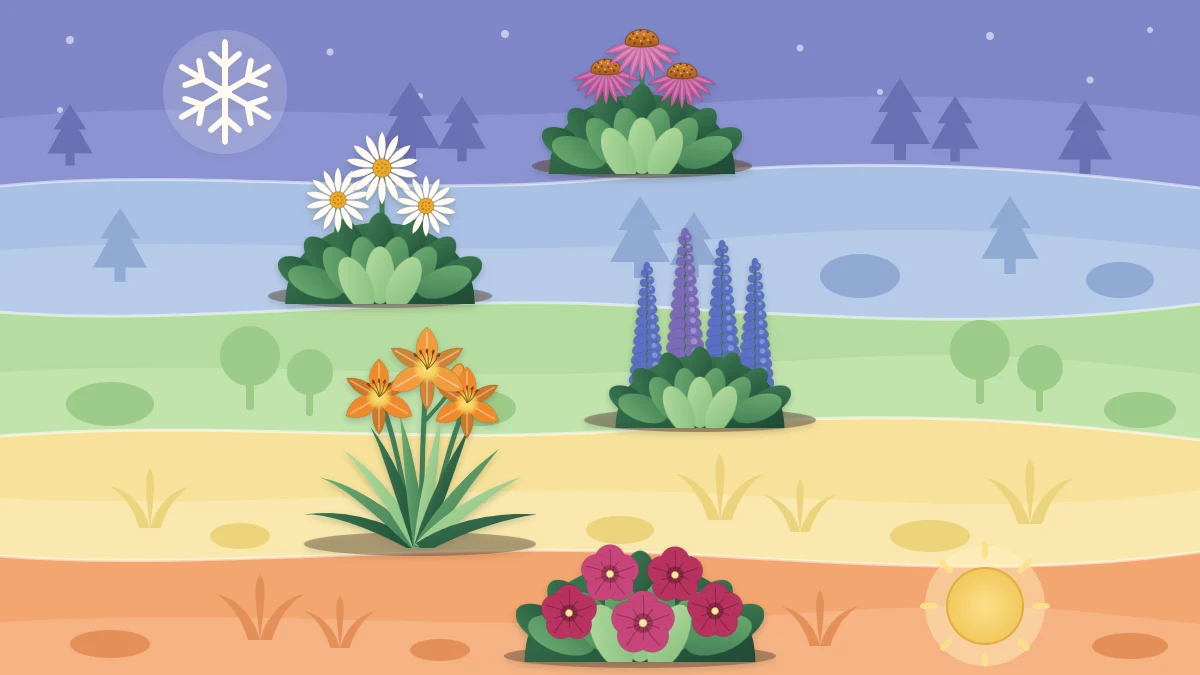
Turn over almost any perennial tag and you will find a line such as “hardy in zones 4 to 9”. Those numbers refer to plant hardiness zones, a way of sorting places by how cold their winters usually get, so you can judge whether a plant is likely to survive winter in your garden.
Zones are useful, and also narrower than many gardeners assume. They answer one question about winter cold and leave several others open.
What the USDA map measures
In the United States the standard reference is the USDA Plant Hardiness Zone Map. It is built on a single figure: the average annual extreme minimum winter temperature. Put simply, that is the coldest reading of each winter, averaged over many years. It is not the coldest temperature ever recorded at a location.
The map divides the country into 13 zones, each covering a band of 10 degrees Fahrenheit. Zone 1 is the coldest and zone 13 the warmest. Each zone is split into two half-zones of 5 degrees, labeled “a” for the colder half and “b” for the warmer.
As an example, zone 6 covers places where the average coldest winter temperature falls between about -10 and 0 °F (roughly -23 to -18 °C). Zone 6a is the colder half of that band and 6b the warmer.
How to find your zone
Go to the official map and enter your ZIP code in the search box, or click your location on the map. You will get a zone number and half-zone letter. Write it down somewhere you will see it when you shop for plants.
The map is revised from time to time as newer weather records are added, so a zone you learned years ago may have shifted by half a zone. USDA explains the data behind the current edition and its limits in its guide to using the maps.
What a zone tells you
A zone tells you whether a perennial is likely to live through a typical winter where you garden. That matters, because a perennial only comes back where it is hardy. If a plant’s range includes your zone, winter cold in an ordinary year should not kill it.
Zones matter much less for annuals, which are replanted each year and are governed by frost and warmth instead. They do explain why some plants change category from one region to another, a point covered in annuals vs. perennials.
What a zone does not tell you
Two gardens can share a zone number and have very little else in common. A mild coastal garden with cool summers and an inland garden with scorching summers and brief cold snaps may sit in the same zone. The map says nothing about:
- Summer heat. Many perennials that shrug off cold struggle through long, hot summers.
- Humidity. Warm, damp air encourages leaf diseases and rot in plants adapted to dry climates.
- Rainfall. Zones do not show how much rain falls or in which season.
- Soil. Wet, poorly drained soil in winter kills many plants that could have handled the cold alone.
- Snow cover. A steady blanket of snow insulates crowns and roots; bare, exposed ground is harsher at the same temperature.
- Day length. Hours of daylight change with latitude and affect when some plants flower.
- Frost dates. Your zone does not give the date of your last spring frost or first fall frost, and so it cannot tell you when to plant.
For timing, you need local frost dates and soil conditions; that is the subject of when to plant flowers.
Microclimates in your own yard
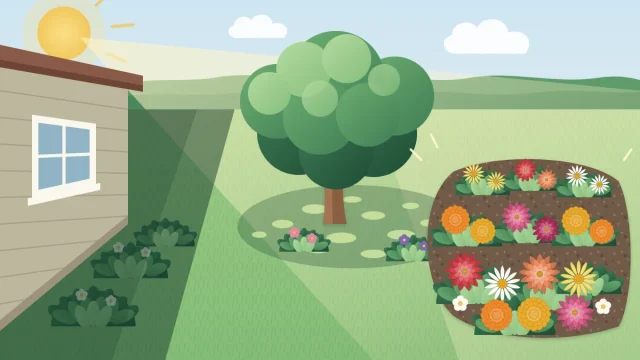
The map is drawn at a fine scale, yet it still cannot show every small pocket of warmth or cold. A microclimate is a spot that runs warmer or colder than its surroundings, and most yards have a few.
- A bed against a sheltered south-facing wall (in the Northern Hemisphere) soaks up sun and stored heat, and can behave as if it were half a zone warmer.
- A low spot where cold air settles on still nights, often called a frost pocket, can be colder than the rest of the garden and frost later in spring.
- Exposed, windy sites dry plants out in winter and are tougher than the zone suggests.
How to read a hardiness range on a tag
A range such as “zones 4 to 9” has two ends, and they mean different things. The lower number is the coldest zone in which the plant is expected to survive winter. The higher number is the warmest zone in which it is expected to do well, which reflects heat, humidity or a need for winter chill more than cold.
Treat the range as approximate. Different growers publish slightly different numbers for the same plant, and varieties within one species can differ in hardiness. Read the tag of the specific variety you are buying.
Plants at the edge of their range are a gamble
Zones are averages. Some winters are colder than the average, and a plant rated only to your zone has no margin when one arrives. At the warm end, a plant at its limit may survive yet flower poorly or live only a few years.
If you want dependable results, choose perennials whose range reaches at least one zone colder than yours and comfortably includes your summers. The list of easy perennial flowers for beginners gives commonly cited ranges for widely grown plants. Save the borderline choices for a sheltered spot and accept that you may lose them.
If you garden outside the United States
USDA zones describe the United States. Other countries publish their own maps and rating systems, and they are not always built the same way. Some use winter minimum temperatures alone; others fold in additional climate factors or use a separate scale of hardiness ratings.
Refine the picture with local knowledge
A zone is the first filter, not the final answer. Your local extension service, or the equivalent advisory service where you live, knows which plants perform well in your area’s summers, soils and rainfall, not only its winters.
Nearby gardeners are just as valuable. A perennial that has grown for years in a garden down the street is better evidence than any number on a tag.
Good to know
No map can promise survival. An unusually severe cold snap, a sudden freeze after warm weather or a winter with no snow cover can kill plants well within their rated range. Zones improve your odds; they do not remove the risk.
Frequently asked questions
How do I find the hardiness zone for where I live?
In the United States, enter your ZIP code on the official USDA Plant Hardiness Zone Map and it returns a zone number with a half-zone letter. Gardeners in other countries should use their own national map or rating system, since the methods differ and conversions are only approximate.
What does hardy in zones 4 to 9 mean?
The first number is the coldest zone where the plant is expected to survive a typical winter. The second is the warmest zone where it is expected to perform well, reflecting heat and humidity more than cold. Ranges are approximate and vary by variety, so check the tag of the plant you are buying.
Does my hardiness zone tell me when to plant?
No. A zone describes average winter low temperatures, not the timing of spring or fall. Planting time depends on your local last spring frost and first fall frost dates, soil temperature and the type of plant. Two places in the same zone can have very different frost dates.