Easy Perennial Flowers for Beginners: 9 Dependable Plants
Nine widely grown perennials for sun and shade, with the light, bloom season, size and approximate hardiness zones for each, plus what to check before you buy.
A perennial is a plant that lives for several years, dying back in the cold season and regrowing from its crown and roots. That makes perennial flowers for beginners an appealing place to start: you plant once, and with reasonable care the same clump returns larger the following year.
The nine plants below are widely grown, forgiving of small mistakes and easy to find as transplants. None of them suits every garden, though, so read the next section before you choose.
A perennial only comes back where it is hardy
Whether a plant survives your winter depends on your climate. In the United States, plant tags use hardiness zone numbers; a perennial rated for your zone or a colder one has a fair chance of returning. If you do not know yours, start with the guide to how plant hardiness zones work. Readers in other countries use their own national hardiness systems.
The zone ranges given here are approximate. Varieties of the same plant differ, so confirm the range on the tag of the specific variety you are buying.
Good to know
Zones describe winter cold only. At the warm end of a range, summer heat and humidity can be just as limiting, and several plants on this list grow poorly through long, hot, humid summers. A local nursery or your extension service can tell you which varieties cope in your area.
Seven perennials for sunny beds
These plants flower best in full sun, which means at least six hours of direct sun a day. Sizes and bloom times are ranges that vary by variety and climate.
Coneflower
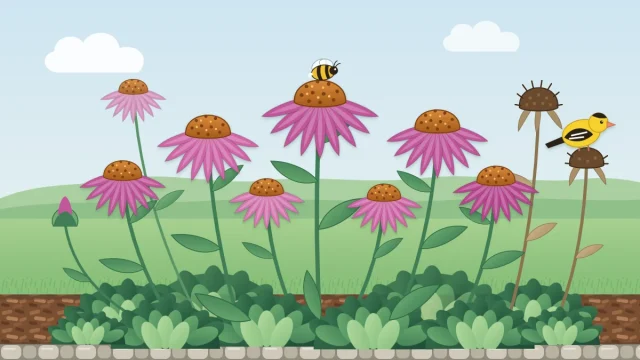
Daisy-like flowers with a raised center, mainly in summer, on stems about 2 to 4 ft (60 to 120 cm) tall. Commonly cited as hardy in roughly USDA zones 3 to 8. It needs soil that drains well, especially in winter. There is more in the guide to growing coneflowers.
Black-eyed Susan
Golden petals around a dark center from midsummer into fall, usually 2 to 3 ft (60 to 90 cm) tall. Commonly cited as hardy in roughly zones 3 to 9. Some kinds are short-lived but reseed, so ask which type you are buying.
Daylily
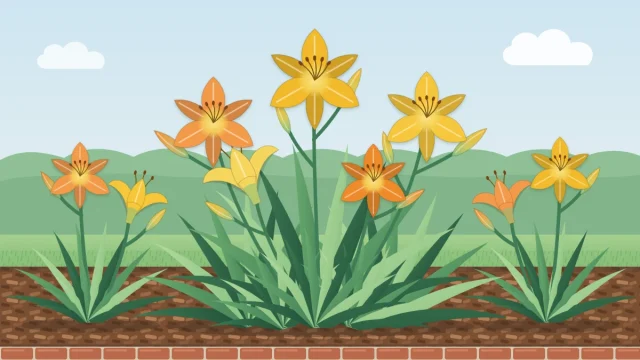
Arching leaves and trumpet flowers on tall stalks, each flower lasting about a day. Height runs from about 1 to 4 ft (30 to 120 cm). Commonly cited as hardy in roughly zones 3 to 9, but foliage types suit different climates; see how to grow daylilies before buying, particularly if you have cats.
Catmint
A soft gray-green mound with lavender-blue flowers from late spring, often 1 to 3 ft tall and at least as wide. Commonly cited as hardy in roughly zones 3 to 8. Shearing it back after the first flush often brings a second one.
Perennial salvia
Upright violet, blue, pink or white spikes in late spring and early summer, about 1 to 2 ft (30 to 60 cm) tall. Commonly cited as hardy in roughly zones 4 to 8. Cutting off faded spikes often prompts more.
Coreopsis
Small yellow daisies over fine foliage from early summer onward, usually 1 to 2 ft tall. Commonly cited as hardy in roughly zones 4 to 9. It dislikes heavy, wet soil and can be short-lived there.
Sedum (stonecrop)
Upright types form fleshy clumps about 1 to 2 ft tall, with flat flower heads that open pink in late summer and deepen through fall. Commonly cited as hardy in roughly zones 3 to 9. Rich soil or shade makes the stems flop.
Two perennials for shade
Hosta
Grown mostly for its leaves, in greens, blues and variegated patterns, with flower spikes in summer. Sizes range from a few inches to 3 ft or more across. Commonly cited as hardy in roughly zones 3 to 8. It prefers part shade to shade and even moisture, and it needs a cold winter rest, so it struggles in very mild climates.
Astilbe
Feathery plumes in pink, red or white over ferny leaves, in late spring to summer, from about 1 to 4 ft tall. Commonly cited as hardy in roughly zones 4 to 8. The one thing to know: it scorches if the soil dries out, so give it part shade and steady moisture.
The nine plants at a glance
| Plant | Light | Main bloom season | Commonly cited zones |
|---|---|---|---|
| Coneflower | Full sun | Summer | 3 to 8 |
| Black-eyed Susan | Full sun | Midsummer to fall | 3 to 9 |
| Daylily | Full sun to part shade | Summer | 3 to 9 |
| Catmint | Full sun | Late spring to summer | 3 to 8 |
| Perennial salvia | Full sun | Late spring to early summer | 4 to 8 |
| Coreopsis | Full sun | Early summer onward | 4 to 9 |
| Sedum | Full sun | Late summer to fall | 3 to 9 |
| Hosta | Part shade to shade | Summer (foliage plant) | 3 to 8 |
| Astilbe | Part shade | Late spring to summer | 4 to 8 |
Treat every row as a starting point. Bloom seasons shift earlier in warm climates and later in cool ones.
Give them two or three seasons
New perennials spend much of their first year growing roots. Expect modest flowers in the first season, a fuller plant in the second and a mature clump by about the third. A bed that looks sparse at planting is usually spaced correctly.
Resist filling the gaps with extra perennials. Annuals or a layer of mulch can cover bare soil while the clumps widen.
Buying and planting in brief
- Match the plant to the site. Check the light and drainage where the bed will go, then choose from the sun or shade group.
- Read the tag. Look for the zone range, mature height and spread, and the light requirement for that variety.
- Choose healthy transplants. Pick compact plants with firm leaves; flowers at the time of purchase matter less than a good root ball.
- Plant in mild weather. Spring after the soil can be worked, or early fall several weeks before the ground freezes, suits many regions. In hot-summer climates the cool season is kinder.
- Set the crown at soil level and space plants for their mature spread.
- Water through the first season. Check the soil a few inches down and water when it feels dry there.
Tip
Start with three or four kinds from this list and plant several of each. A few repeated groups look more settled than one of everything, and you learn each plant properly.
After a few years, clumps that flower less or go bare in the middle can be split to renew them. The method is in the guide to dividing perennials step by step.
Frequently asked questions
Do perennials come back every year?
Only where they are hardy. A perennial returns when your winter cold, summer heat and soil drainage suit it. Check the hardiness zone range on the tag of the specific variety against your own zone, and remember that some perennials are naturally short-lived even in a climate that suits them.
Will perennials flower in their first year?
Many transplants give a few flowers in the first season, but most of their energy goes into roots. Expect a fuller show in the second year and a mature clump by about the third. Plants grown from seed often take longer than young plants bought in pots.
How many kinds of perennials should a beginner start with?
Three or four kinds is plenty for a first bed. Buy several of each and plant them in groups so the bed looks deliberate. You can add more variety once you have seen how those plants behave through a full year in your own conditions.