Growing Coneflowers: A Beginner Guide to Echinacea
How to grow purple coneflower in a sunny bed: where it is hardy, the sun and drainage it needs, planting, first-season watering, deadheading and when to leave the seed heads.
If you have a sunny bed and want a perennial that flowers for weeks without much attention, growing coneflowers is a sensible first project. These sturdy plants carry daisy-like flowers on upright stems through much of the summer, and bees and butterflies visit them steadily.
They are not demanding, but they do have firm preferences about sun, drainage and climate. Get those right at planting time and the rest of the care is light.
What coneflowers are
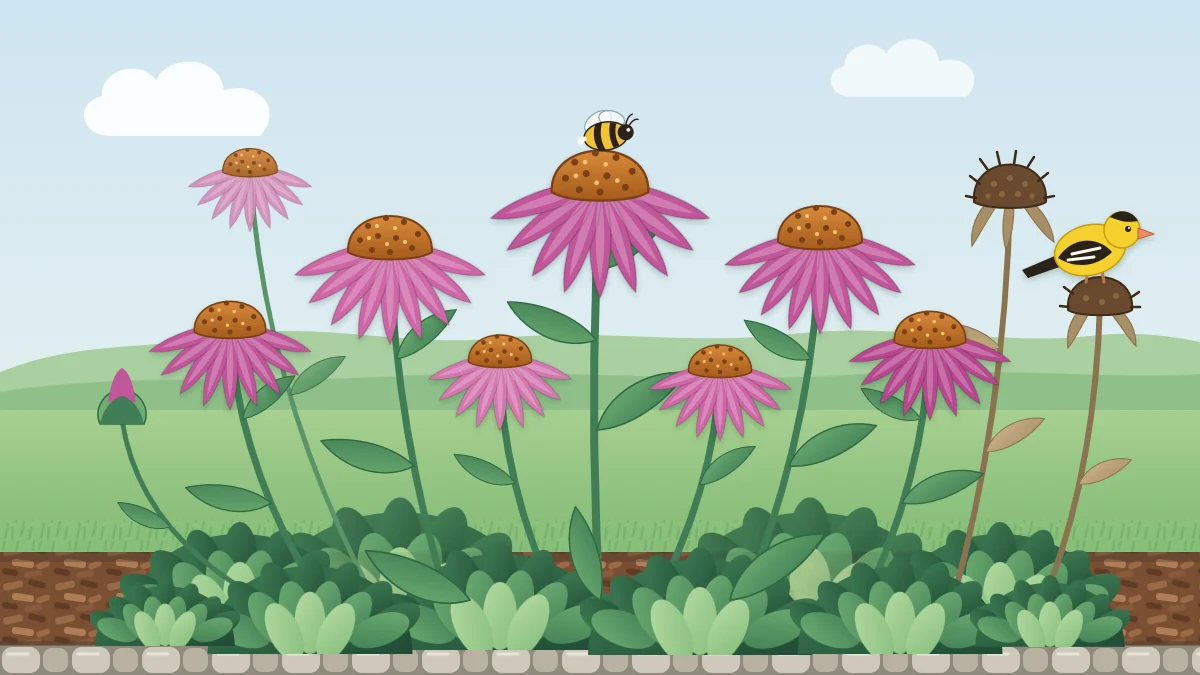
The best-known coneflower is purple coneflower, Echinacea purpurea, a perennial native to central and eastern North America. Each flower has a raised, bristly central cone ringed by petals that often droop slightly, in shades of pink-purple on the species.
Plants usually reach about 2 to 4 ft (60 to 120 cm) tall and form a clump that widens slowly. The main bloom season is summer, often running into early fall; exact timing and height vary by variety and climate.
Breeders have added relatives and hybrids in white, yellow, orange and red, with single or double flowers. Many are good garden plants, but some of the newer hybrids in unusual colors tend to be shorter-lived than the plain species. If long life matters more to you than novelty, the species and its close selections are the dependable choice.
Where coneflowers are hardy
Purple coneflower is commonly cited as hardy in roughly USDA zones 3 to 8, and some sources extend that to zone 9. See the NC State Extension Gardener Plant Toolbox for a full plant profile.
Treat that range as approximate and confirm it on the plant tag, because varieties differ. Winter cold is only half the picture: at the warm end, long stretches of heat and humidity can shorten the plant’s life, and wet winter soil is a more common cause of loss than cold itself.
Good to know
A zone range tells you where a plant is likely to survive winter, not how well it will perform. Ask a local nursery or your extension service which coneflower varieties do well in your area before buying a large number.
Sun and soil
Give coneflowers full sun, meaning six or more hours of direct sun a day. They tolerate light shade, but expect fewer flowers and stems that lean toward the light.
Drainage matters more than richness. Coneflowers grow in average garden soil and even in fairly lean ground, but they dislike sitting in water, especially in winter. If puddles linger in the spot after rain, choose a different place or raise the bed. Very rich soil and heavy feeding tend to produce tall, floppy growth.
Planting coneflowers
Most beginners start with transplants in pots. Timing depends on your climate: spring planting suits cold-winter regions because the roots get a full season to settle, while early fall works where winters are milder, provided the plants have several weeks to root before the ground freezes. In hot-summer climates, avoid planting into the hottest part of the year.
- Loosen the soil across the planting area and mix in a modest amount of compost if the ground is poor or compacted.
- Dig a hole as deep as the root ball and somewhat wider.
- Set the plant so the crown sits level with the surrounding soil, not buried.
- Space plants about 18 to 24 in (45 to 60 cm) apart, or as the tag advises, so air can move between them.
- Firm the soil gently and water well to settle it around the roots.
Coneflowers can also be grown from seed, and the species often reseeds itself around the parent plant. Seedlings of named hybrids usually differ from the parent in color.
Watering and feeding
Established coneflowers tolerate dry spells well, which is part of their reputation for toughness. New plants are a different matter. Through the first growing season, check the soil a few inches down and water deeply whenever it feels dry at that depth.
After that first year, most plants need extra water only in prolonged dry weather. Wilting in the heat of the afternoon that recovers by evening is common and is not always a sign of thirst, so check the soil before you reach for the hose.
Feeding is rarely needed in decent soil. A thin layer of compost around the clump in spring is usually enough; if growth is weak, feed according to a soil test and the product label.
Deadheading and seed heads
Removing faded flowers during summer encourages the plant to keep producing new buds and extends the display. Cut each spent stem back to a leaf or a side bud lower down. The technique is covered in the guide to how and when to deadhead flowers.
Toward the end of the season, stop cutting. The dark, dry cones are full of seeds that birds such as goldfinches eat, and they stand through frost and snow, giving the bed some shape in winter.
Tip
You can have both: deadhead through the first half of the flowering season for more blooms, then leave the last round of flowers to form seed heads.
Old stems can be cut down in late winter or early spring before new growth appears. For how this fits with the rest of the bed, see the guide to fall cleanup and winter preparation.
Dividing and common problems
Coneflowers do not need frequent division. If a clump becomes crowded or flowers less after several years, lift and split it in spring or early fall, in cool, moist weather. Many gardeners simply let a few self-sown seedlings replace older plants.
A few things to watch for:
- Flopping stems often point to too much shade, rich soil or overwatering.
- A white, powdery coating on leaves is often powdery mildew, which is more likely where plants are crowded. Wider spacing and better airflow help.
- Green, distorted flowers can have more than one cause, including a disease spread by insects. Your local extension service can identify the problem and advise whether the plant should be removed.
- Chewed petals or leaves are usually cosmetic. Pick off any insects you find by hand.
Good companions
Coneflowers look best in groups of three or more, with plants that enjoy the same sun and drainage. Black-eyed Susans, perennial salvia, catmint and ornamental grasses are classic partners. You will find these and other reliable choices in the list of easy perennial flowers for beginners.
Frequently asked questions
Do coneflowers come back every year?
Purple coneflower is a perennial and returns where it is hardy and the soil drains well in winter. Check the zone range on the tag for your variety. Some newer hybrids in unusual colors are shorter-lived than the species, so they sometimes fade out after a few seasons.
Should I cut back coneflowers in fall?
You do not have to. Many gardeners leave the last seed heads standing because birds eat the seeds and the stems add winter interest, then cut the old growth down before new shoots appear in spring. Remove stems earlier if the plant had disease problems during the season.
Why are my coneflowers falling over?
Floppy stems often come from too little sun, very rich soil, heavy feeding or too much water. Check how many hours of direct sun the spot gets and how wet the soil stays. Moving the clump to a sunnier, leaner spot in cool weather usually gives sturdier growth.