Deadheading Flowers: How, When and Which Ones
A clear guide to removing faded blooms: where to cut, three methods for different plant shapes, which flowers respond, which do not need it, and when to leave seed heads standing.
At a glance
What you need
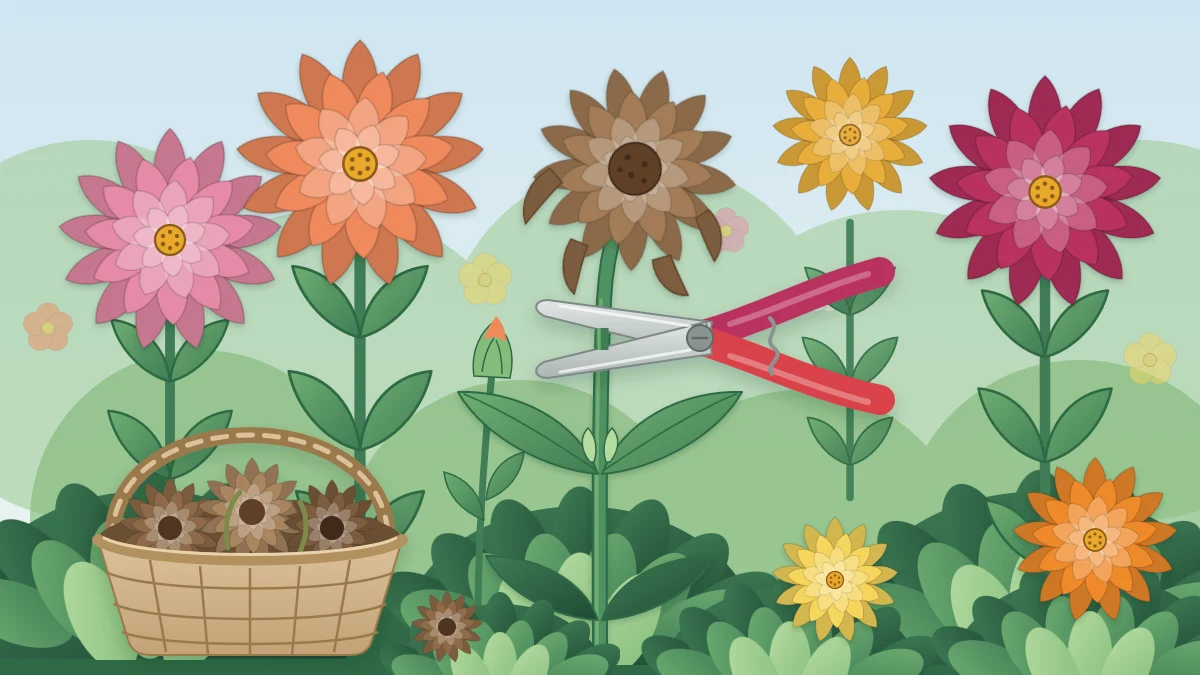
- Small garden snips or hand pruners
- Hand shears for mass-flowering plants
- Bucket or basket for spent flowers
- Cloth for wiping blades
- Gloves
Faded flowers are more than untidy. Left in place, many of them turn into seed heads, and a plant busy ripening seed often slows down on making new buds.
Deadheading flowers simply means removing blooms once they are spent. It is one of the quickest jobs in the garden, it needs almost no equipment, and on the right plants it gives more color for longer. The catch is that not every plant responds, and late in the season there are good reasons to stop.
What deadheading does and why it works
A flower exists to produce seed. Once a bloom is pollinated and fades, the plant puts energy into the developing seeds. Take the spent flower away before that happens and many plants react by sending up more buds or by flowering over a longer period.
There are other benefits. Plants look fresher, soggy old petals do not sit on the leaves, and vigorous self-seeders drop fewer unwanted seedlings. Results vary, though: some perennials bloom once a year no matter what you do, and for those deadheading is only about looks. For more background, see the perennial care guidance from University of Maryland Extension.
How to deadhead a single stem
This is the method for most flowers that carry blooms on leafy stems, such as zinnias, marigolds, cosmos and coneflowers.
- Pick out a flower that is clearly finished: petals faded, browning or dropping.
- Follow its stem down to the first set of healthy leaves or to a side bud or side shoot.
- Cut or pinch just above that point, about 1/4 in (6 mm) above the leaves or bud.
- Drop the spent flower into a bucket or basket and compost it if the plant is healthy.
Cutting above leaves or a bud matters. Snapping off only the flower head leaves a bare stub that browns and looks worse than the faded bloom, while a cut above a leaf joint is hidden and often prompts a new flowering shoot from that spot.
Tip
Before you cut, check that you are removing a spent flower and not a new bud. On some plants the two look alike. Buds are usually firm and plump, while spent flowers are soft, papery or already swelling into a seed pod.
Two other methods for different plant shapes
Leafless flower stalks
Daylilies and hostas carry their flowers on bare stalks that rise from the base. Individual faded daylily blooms can be snapped off for neatness, but the main task comes later: when every bud on a stalk has finished, cut the whole stalk off near the base.
Masses of small flowers
Plants covered in many small blooms, such as catmint and threadleaf coreopsis, would take hours to tidy one flower at a time. After a flush fades, shear the whole plant back lightly, taking off the spent flowers and a little of the foliage with hand shears. Fresh growth follows, and often another round of flowers.
Tools and clean cuts
Soft stems can be pinched between thumb and fingernail. For anything tougher, use small garden snips or hand pruners with clean, sharp blades. Dull blades crush stems instead of cutting them.
Wipe blades clean when you finish, and clean them between plants if one looks diseased, so you do not carry a problem along the bed.
Which flowers respond well
These widely grown flowers usually reward regular deadheading. The plants named are examples, and how long any of them keeps flowering depends on the variety and your climate.
| Flower | Type | How to deadhead |
|---|---|---|
| Zinnia | Warm-season annual | Cut above a pair of leaves |
| Marigold | Warm-season annual | Pinch or snip below the swollen base of the flower, above the leaves |
| Cosmos | Warm-season annual | Cut the thin flower stem back to a side shoot |
| Petunia | Warm-season annual | Remove the flower with the seed pod forming behind it, not only the petals |
| Salvia | Perennial or annual, by kind | Cut finished spikes back to side shoots or leaves |
| Coneflower | Perennial | Cut above the next bud or leaf lower on the stem |
| Coreopsis | Perennial or annual, by kind | Snip stems or shear lightly after a flush |
Cutting flowers for a vase does the same job as deadheading, only earlier. The guide to growing zinnias shows how cutting keeps that plant producing.
Flowers that do not need it
Some plants are described as self-cleaning: their spent flowers shrivel and drop without help, and new buds keep coming. Many modern petunia types and impatiens fall into this group, as do wax begonias. Plant tags often say when a variety needs no deadheading.
Other plants bloom once and stop regardless. Removing their faded flowers tidies them but does not bring more, so it is optional. If you are unsure about a plant, deadhead a few stems and watch what happens over the next few weeks.
When to stop deadheading
Toward the end of the growing season, leave the last flowers in place on plants where the seed heads earn their keep:
- For birds. Seed heads of coneflowers, black-eyed Susans and sunflowers are a food source for seed-eating birds.
- For winter interest. Sturdy seed heads such as coneflower and sedum look good standing in frost and snow.
- For self-sowing. If you want plants such as cosmos or columbine to seed themselves around, they need to ripen seed.
- For seed saving. Let a few of the best flowers mature fully and dry on the plant.
When the season ends varies widely with climate, so judge by the plants and the weather, not the calendar. Where frost ends the season, there is little point deadheading annuals in the final weeks before your first fall frost.
Make it a walk-through habit
Deadheading works best as a small, regular habit instead of a big occasional job. A stroll through the garden about once a week during the flowering season, snips in hand, is enough for most beds; in peak bloom, fast growers may give you something to remove every few days.
Use the same walk to look at soil moisture, weeds and anything unusual on the leaves. The guide to summer flower garden care builds that into a simple routine. Deadheading is also one of several ways to lengthen the show, which the article on planning for bloom from spring to fall explains in full.
Frequently asked questions
Where exactly do I cut when deadheading?
Follow the stem of the faded flower down to the first set of healthy leaves, or to a side bud or shoot, and cut just above it. Avoid snapping off only the flower head, which leaves a bare stub. For plants with leafless stalks, remove the whole stalk at the base once all buds have finished.
Do all flowers need deadheading?
No. Many respond with more blooms, but self-cleaning plants such as wax begonias, impatiens and many modern petunias drop spent flowers without help. Some perennials flower once a year whatever you do, so removing their faded blooms is only for tidiness. The plant tag often says whether deadheading is needed.
Should I deadhead in fall?
Often it is better to stop late in the season. Seed heads left on plants such as coneflowers and black-eyed Susans feed birds and look attractive in winter, and plants you want to self-sow need ripe seed. Annuals about to be ended by frost gain little from further deadheading.