How to Water a Flower Garden: When, How Much and How
Learn to water by need instead of habit: how to check soil moisture, why deep watering at the base in the morning works, how to gauge the amount, and how to spot too much water.
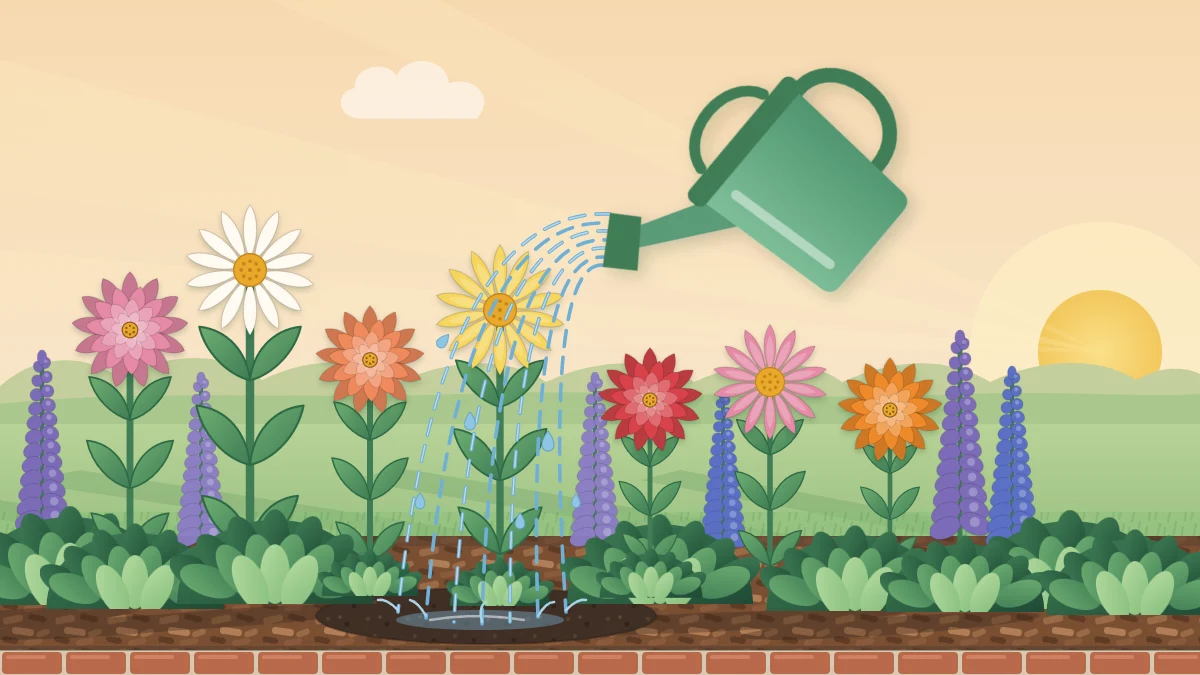
Most watering trouble comes from watering by habit instead of by need. A bed that gets a quick sprinkle whenever you pass can be bone dry a few inches down, and a bed soaked on a fixed routine can stay soggy for days.
To water a flower garden well, you do three things: check the soil first, water deeply when it really is dry, and aim at the roots instead of the leaves. The rest of this guide explains how to do each one and how to judge the amount.
Why there is no fixed schedule
How fast a bed dries depends on conditions that differ from garden to garden and from one week to the next:
- Soil type. Sandy soil drains and dries quickly; clay holds water much longer.
- Weather and rainfall. Heat, wind and low humidity pull water out fast. Cool, cloudy or rainy spells slow everything down.
- Mulch. A covered soil surface loses far less to evaporation. See the guide to mulching a flower bed.
- Plant type. Some flowers want steady moisture, while others are drought tolerant once established.
- Age. New plantings have small root systems and dry out sooner than established plants.
- Ground or container. Pots hold little soil and dry far faster than beds.
With that many variables, any rule that names a number of days is wrong for somebody. Checking takes a few seconds and is right every time.
Check the soil before you water
Push a finger or a trowel 2 to 3 in (5 to 8 cm) into the soil near the plants, under any mulch. If it feels cool and moist at that depth, wait. If it is dry there, it is time to water. The surface tells you very little, because it dries first while the root zone can still be damp.
Wilting needs the same check. Leaves that droop in the heat of the afternoon and recover by evening are often reacting to heat, not to dry soil. If the plants are still limp in the cool of the morning, or the soil is dry at root depth, they need water. If the soil is wet and the plants still wilt, more water is not the answer.
Water deeply, at the base, in the morning
Three principles cover most situations.
Deeply and less often
A long, slow soak that wets the soil well down encourages roots to grow deeper, where moisture lasts. Frequent light sprinkles wet only the top layer, so roots stay shallow and the plants need rescuing in every hot spell. After watering, dig a small test hole to see how far the moisture went. It is often shallower than you expect.
At the base
Roots take up the water, so put it on the soil around the plant. Leaves that stay wet for long periods are more prone to leaf diseases, and water sprayed over the top partly evaporates or runs off the foliage.
In the morning
Morning is generally the best time. The air is cooler and calmer, so less is lost to evaporation, and any splashed leaves dry quickly as the day warms. Evening is a reasonable second choice if you keep water off the foliage. A plant that is seriously dry should be watered whatever the hour.
For more detail on these principles, see the watering tips from Iowa State University Extension and Outreach.
How much is enough?
A commonly cited benchmark for flower beds is about an inch (2.5 cm) of water per week from rain and irrigation combined. Treat it as a rough guide only. Sandy soil, heat and wind push the need up; clay soil, cool weather and mulch pull it down; and established drought-tolerant plants can need less.
To see what your garden is actually getting:
- Set a rain gauge in the open to measure rainfall.
- Place a straight-sided can in the bed when you run a sprinkler or soaker hose and note how long it takes to collect a given depth.
- Follow up with the finger test a day later. The soil has the final word.
New plantings need closer attention
Transplants and seedlings live on a small volume of soil until their roots spread. For the first few weeks, check them much more often than the rest of the bed and keep the root zone evenly moist, not waterlogged. Water the root ball itself, since surrounding soil can be damp while the original root ball is dry.
As new growth appears, lengthen the gaps between waterings and water more deeply. Even perennials described as drought tolerant need regular watering through their first season.
Tip
Containers follow their own rules: they dry faster, heat up in the sun and need checking far more often than beds. The guide to growing flowers in containers covers how to water them.
Tools that put water where it is needed
- Watering can with a rose. The perforated head breaks the flow into a gentle shower. Good for seedlings, new transplants and small beds.
- Hose with a watering wand. A long handle and soft spray let you reach the base of plants without bending or blasting soil away.
- Soaker hose or drip line. Laid along the bed under the mulch, these deliver water slowly at soil level, keep leaves dry and waste very little.
Signs you may be watering too much
Too much water can look confusingly like too little, because roots sitting in saturated soil cannot work properly. Possible signs include:
- Yellowing lower leaves on plants growing in soil that is always wet.
- Wilting even though the soil is moist.
- Soft, darkened stems at the soil line.
- Green algae or moss on a soil surface that never dries.
None of these proves overwatering by itself, since poor drainage, disease and other problems can cause the same symptoms. Check moisture at root depth, let the soil dry somewhat before watering again, and look at whether the bed drains slowly after rain.
Dry spells and local watering rules
Many areas restrict outdoor watering during dry periods, limiting the days, hours or methods you can use. Check your local rules before you set up a routine. When water is short, give priority to new plantings and containers, since established plants usually cope better, and rely on mulch and morning watering to make each gallon go further.
For a wider routine through the hottest part of the year, see the guide to caring for a flower garden in summer.
Frequently asked questions
How often should a flower garden be watered?
There is no single answer, because soil, weather, mulch, plant type and plant age all change how fast a bed dries. Instead of counting days, push a finger a few inches into the soil near the plants. Water thoroughly when it is dry at that depth and wait when it still feels moist.
Is it bad to water flowers in the evening?
Morning is generally better, because leaves dry quickly and less water evaporates. Evening watering is acceptable if you apply the water to the soil and keep the foliage dry, since leaves that stay wet overnight are more prone to disease. A badly wilted plant in dry soil should be watered right away, whatever the time.
Why do flowers wilt when the soil is wet?
One possibility is too much water or poor drainage: roots in saturated soil cannot take up water properly, so the plant droops. Afternoon heat can also cause temporary wilting. Check moisture at root depth, let the soil dry somewhat, and see whether the plant recovers in the cool of the morning.