Container Flower Gardening for Beginners
No bed? Flowers grow well in pots if you choose a container that drains, fill it with potting mix and match plants to your light. Here is what changes when roots live in a pot.
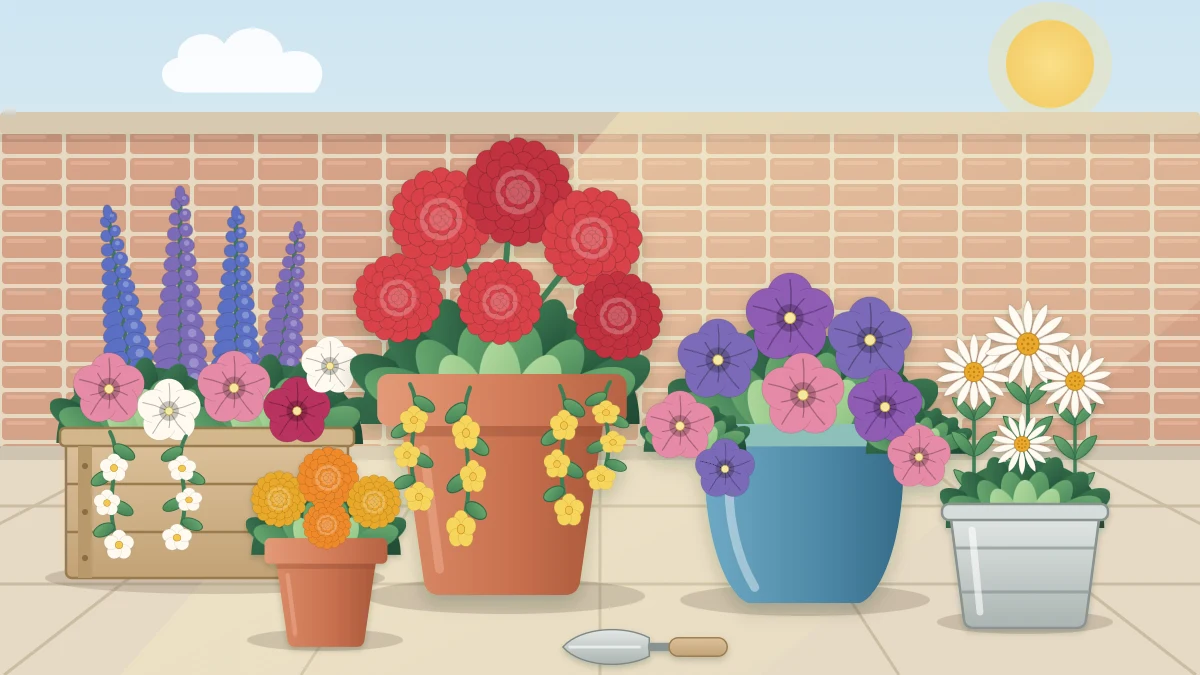
You do not need a bed to grow flowers. A doorstep, a balcony or a patio corner that gets a few hours of light is enough for container flower gardening, and pots let you put color exactly where you will see it most.
A pot is not simply a small bed, though. A plant in a container depends on you for nearly everything, and a few choices made at the start (the pot, the mix and the spot) decide how much work the season will be.
How Pots Differ From the Ground
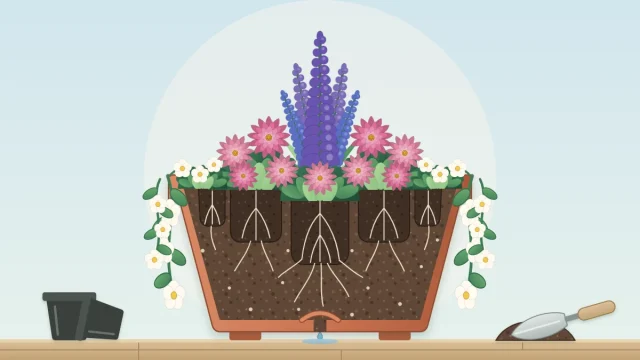
In a bed, roots can spread out and reach down into soil that stays cool and holds moisture for days. In a pot, they have only the mix you gave them. That changes four things:
- Water runs out quickly. A limited volume of mix dries much faster than garden soil, especially in sun and wind.
- Roots get hot. The sides of a pot warm up in direct sun, and so does the mix inside.
- Nutrients wash away. Every watering carries a little fertility out through the drainage holes.
- Roots are exposed to cold. In winter a pot freezes from all sides, while the ground insulates roots planted in it.
Choosing a Container
Almost anything that holds potting mix can grow flowers, on one condition: it must have drainage holes. Without them, water collects at the bottom and roots sit in it and rot. If a decorative pot has no holes, either drill some or use it as an outer sleeve around a plain pot that drains.
Size matters more than style. A bigger pot holds more mix, so it stays moist longer and swings less between hot and cool. For a beginner, one container about 14 to 16 in (35 to 40 cm) across is far more forgiving than three tiny ones.
Material trade-offs
- Terracotta is porous, so it breathes and dries faster. It suits plants that dislike wet roots, and it is heavy enough to steady tall plants. It can crack if it freezes while damp.
- Glazed ceramic holds water longer and comes in many colors. It is heavy and can also crack in hard freezes.
- Plastic and resin are light, inexpensive and slow to dry out. Dark colors absorb more heat in strong sun.
- Wood insulates roots well but eventually rots.
- Metal heats up fast in sun, which can stress roots. It works better in part shade.
On a balcony or deck, think about weight. A large pot of wet mix is heavy, so check what your structure is meant to carry and choose lighter materials if you are unsure.
Use Potting Mix, Not Garden Soil
Fill containers with potting mix, the light, bagged blend made for pots. Garden soil packs down in a container, drains poorly and may carry weed seeds. Potting mix stays open, so water passes through while the mix still holds enough for roots.
You do not need a layer of gravel or broken pots at the bottom. It does not improve drainage and it takes space that roots could use. Fill the whole pot with mix; a small piece of mesh over the hole keeps it from washing out. University of Illinois Extension covers containers and growing media in more detail in its container garden tips, and the full planting sequence is in the guide to planting a flower container step by step.
Match the Plants to the Light
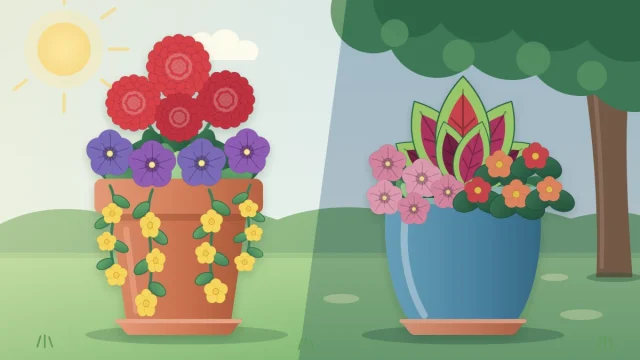
Before you buy anything, watch the spot for a day. Count the hours of direct sun it really gets, not the hours you hope for. A wall, a railing or an overhang can turn an open-looking balcony into part shade.
Then choose plants whose tags match that light, and put plants with the same light and water needs in the same pot. The list of flowers that do well in containers in sun and in shade sorts common choices by light, habit and the weather they prefer.
Good to know
Which flowers suit your pots depends on your climate as well as your light. Most summer container flowers are frost tender, so wait until after your last spring frost to set them out, and remember that frost dates are averages rather than promises.
Watering Containers
There is no fixed schedule that fits every pot. Instead, check. In warm weather, look at your containers daily: push a finger about an inch (2.5 cm) into the mix, or lift a small pot to feel its weight. If the mix is dry at that depth or the pot feels light, water.
When you do water, water thoroughly, until it runs from the drainage holes, so the whole root ball is wet and not only the surface.
How often that turns out to be varies widely. Small pots in sun and wind may need water more than once a day during a hot spell, while the same pots in cool, damp weather may go several days untouched. For the general method, see how to water a flower garden.
Feeding in Brief
Potting mix holds few nutrients, and frequent watering rinses out what is there. Container flowers that bloom for months therefore rely on you for feeding. Many mixes include a starter fertilizer that lasts only part of the season; after that, use a fertilizer intended for flowering container plants and follow the product label for how much and how often.
Grouping Pots, Pot Feet and Saucers
Pots clustered together look fuller than pots dotted around, and they shade one another’s sides, which keeps roots cooler.
Pot feet, or a few flat stones, lift a container slightly so the holes drain freely and the surface underneath dries. Saucers protect decks and catch drips, but empty them after heavy rain or watering so that roots are not left standing in water.
What Happens to Pots in Winter
Annuals finish with the first fall frost, and their pots can be emptied and stored. Perennials are different. Because roots in a container are more exposed, a perennial in a pot is less cold-hardy than the same plant in the ground. A common rule of thumb is to choose perennials rated a zone or two colder than your own hardiness zone if they must stay outside in pots.
In cold-winter regions, protect potted perennials by moving them to a sheltered, unheated spot or sinking the pots into the ground, or simply treat them as seasonal plants. In mild-winter climates, containers can carry cool-season flowers through the months when summer plants rest.
Frequently asked questions
Do flower pots really need drainage holes?
Yes. Without holes, extra water has nowhere to go, so it pools at the bottom and roots can rot. If you love a pot that has none, drill holes if the material allows, or slip a plain draining pot inside it and tip out any water that collects in the outer one.
Can I use soil from the yard in my containers?
It is better not to. Garden soil compacts in a pot, drains slowly and may bring weed seeds with it. Bagged potting mix is made to stay loose in a confined space, so water moves through while roots still get air. Save garden soil for beds.
How big should a container for flowers be?
Bigger is easier. A larger pot holds more mix, so it dries more slowly and gives roots steadier conditions. A single pot roughly 14 to 16 inches across is a comfortable start for a mixed planting. Very small pots can work, but expect to check them much more often in warm weather.