Best Flowers for Containers: Sun and Shade Choices
A pick-list of container flowers sorted by light, with each plant's habit, its preference for heat or cool weather and one care note, plus how climate and season change the list.

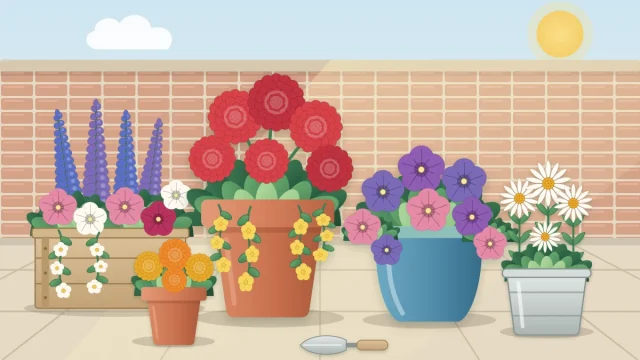
A garden center bench in planting season can stop you in your tracks: hundreds of plants in bloom, all of them looking perfect. The best flowers for containers are not the prettiest ones on the bench, though. They are the ones that match the light on your patio and the weather of the months ahead.
Start with light, then narrow by season and climate. The lists below are sorted that way, with a note on how each plant grows and one thing to know about its care.
Sort by Light First
Know how many hours of direct sun your pots will get before you shop. Plant tags use the same terms you will see here: full sun means roughly six or more hours of direct sun, part sun and part shade mean less, and shade means very little. A plant in the wrong light rarely recovers by being watered or fed more.
If you are new to pots, the overview of container flower gardening for beginners explains how to judge a spot and choose a container.
Flowers for Sunny Containers
These are mostly warm-season, frost tender plants, grown as annuals in most places and set out after your last spring frost.
- Petunias and calibrachoa. Mounding to trailing plants covered in trumpet-shaped flowers; calibrachoa has smaller blooms. Both need a pot that drains well, and long stems can be trimmed back in midsummer to freshen them.
- Geraniums (pelargoniums). Upright plants with rounded flower heads. They tolerate drying a little between waterings better than many container flowers. Snap off spent flower stalks.
- Marigolds. Compact, upright mounds in yellow, orange and rust. They like warmth and sun; deadheading keeps them tidy. See the guide to growing marigolds for types and care.
- Compact zinnias. Upright, heat-loving annuals. Choose short varieties for pots and give them room for air to move between plants.
- Lantana. A mounding or spreading tender perennial with clustered flowers, usually grown as an annual where winters are cold. It wants heat and sun.
- Verbena. Spreading and trailing, with flat flower clusters. Good at pot edges; trim it if flowering slows.
- Sweet alyssum. A low, honey-scented edging plant that spills gently over a rim. It prefers cooler weather and may pause in high heat.
- Sweet potato vine. Grown for trailing foliage in lime green, bronze or near black. It loves heat and grows fast, so cut it back when it overwhelms its neighbors.
Flowers for Shade and Part Shade
- Impatiens. Mounding plants that flower steadily in shade. They are frost tender and wilt quickly when dry, so check their mix often.
- Begonias. Wax begonias form neat mounds and accept a range of light; tuberous types carry larger flowers and prefer shade and milder temperatures. Let the surface of the mix dry slightly between waterings.
- Fuchsia. Trailing stems hung with dangling two-tone flowers, a classic for hanging baskets. Fuchsias are happiest where summers are cool to mild.
- Coleus. A foliage plant with patterned leaves in red, lime, pink and burgundy. Pinching the stem tips keeps it bushy.
- Lobelia. A trailing plant with small blue, purple or white flowers. It shines in cool weather and often fades when summer turns hot.
At a Glance
| Flower | Light | Habit | Weather preference |
|---|---|---|---|
| Petunia, calibrachoa | Full sun | Mounding to trailing | Warm |
| Geranium | Full sun | Upright | Warm |
| Marigold | Full sun | Upright mound | Warm |
| Compact zinnia | Full sun | Upright | Hot |
| Lantana | Full sun | Mounding, spreading | Hot |
| Verbena | Full sun | Trailing | Warm |
| Sweet alyssum | Sun to part sun | Low, spilling | Cool to mild |
| Sweet potato vine | Sun to part shade | Trailing foliage | Hot |
| Impatiens | Shade to part shade | Mounding | Warm |
| Begonia | Part shade | Mounding | Mild to warm |
| Fuchsia | Part shade to shade | Trailing | Cool to mild |
| Coleus | Part shade | Upright foliage | Warm |
| Lobelia | Part sun to part shade | Trailing | Cool |
Treat the table as a starting point. Varieties differ, and the tag on the plant in your hand is the better guide.
Heat, Humidity and Season Change the List
No single list suits every patio, because plants differ sharply in how they handle heat and humidity. Lobelia, fuchsia and pansies look their best in cool weather and tend to fade once days and nights turn hot. Lantana and annual vinca do the opposite: they sulk in a cold spring and come into their own in real heat.
That is why many gardeners plant by season instead of once a year. Cool-season pots of pansies, violas and sweet alyssum carry spring and fall. Warm-season pots take over for summer. In hot-summer, mild-winter climates the pattern shifts: cool-season flowers may be the winter display, and only true heat lovers last through midsummer.
Good to know
Ask what performs well locally. A plant that flowers for months in a cool coastal summer may stall in a humid inland one, and the reverse. Staff at an independent nursery or your local extension service can tell you which container flowers hold up in your area.
Combining Plants in One Pot
The plants that share a container share its light and its water, so combine only those with the same needs. Geraniums that like to dry slightly make poor partners for thirsty impatiens, and a sun lover will stretch and stop blooming in a pot placed for shade plants.
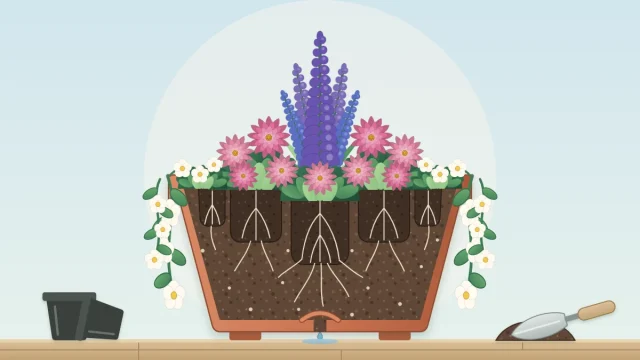
Once needs match, mix habits: something upright, something mounding and something trailing fills a pot from center to rim. The step-by-step method is in how to plant a flower container.
Tip
Gather your choices on the cart and stand back before you pay. If the tags disagree about sun or water, swap one plant now instead of struggling with the pot all season.
Perennials and Small Grasses in Pots
Containers are not only for annuals. Compact perennials such as coral bells, hostas for shade and low sedums for sun give foliage and texture that last beyond a single flush of bloom, and small ornamental grasses add height and movement.
Check the hardiness zone on the tag for the specific variety, and remember that a perennial in a pot is less cold-hardy than the same plant in the ground, because its roots are more exposed. Heat and humidity at the warm end of a plant’s range matter as much as winter cold. In cold-winter regions, plan to shelter potted perennials over winter, move them into a bed in fall, or enjoy them as seasonal plants.
Frequently asked questions
Which container flowers handle hot summers?
Lantana, annual vinca, zinnias and sweet potato vine are widely grown for heat, and marigolds and geraniums generally cope with warm weather too. Results still depend on your humidity, the size of the pot and how reliably it is watered, so ask locally which varieties hold up through your hottest stretch.
Can I mix sun and shade plants in the same pot?
It rarely works well. One group will always be in the wrong light, and it usually shows as stretched stems, scorched leaves or few flowers. Build each container from plants whose tags call for the same light and similar moisture, then place the pot where that light is available.
Do I have to replant my containers every year?
Annuals last one growing season, so pots filled with them are replanted each year, and many gardeners swap plants as seasons change. Perennials can live in pots for several years, but they are less cold-hardy there than in the ground and may need winter shelter in cold regions.