Flower Gardening for Beginners: How to Start Your First Bed
A plain orientation for your first flower bed: the four decisions that shape most results (sun, soil, climate and plant type) and a simple first-season sequence to follow.
Most advice on flower gardening for beginners starts with a shopping list. A better start is a slower one: a little time spent noticing where the sun falls, what the soil feels like and how cold your winters get. Those things decide which plants will do well for you far more than anything you do later with a watering can.
The list of decisions is short. Get four of them roughly right, keep your first bed small, and you can have color in your first season without spending much or digging up half the yard.
Start small and close to water
A first bed of about 4 by 8 ft (1.2 by 2.4 m) is plenty. So is a group of three or four large containers by the door. A small space lets you prepare the soil properly, buy enough plants to fill it, and keep up with weeding and watering when life gets busy.
Put the bed where you will see it every day and where a hose or watering can reaches easily. Keep it narrow enough that you can reach the middle without stepping on the soil.
Decision one: how much sun the spot gets
Plant tags are sorted by light: full sun, part sun, part shade and shade. Full sun commonly means around six or more hours of direct sun a day, and many classic bedding flowers want it. Shadier spots need different plants.
Guessing is unreliable, because shadows from houses, fences and trees move through the day and through the year. Spend one clear day checking the spot every hour or so before you buy anything. The method is laid out in the guide on how to assess sunlight in your garden.
Decision two: what the soil is like
Most flower roots live in the top foot (30 cm) or so of soil, so that layer deserves your effort. Pick up a handful of moist soil and squeeze it. Soil that falls apart at once is sandy and dries fast. Soil that stays in a dense, sticky lump is heavy with clay and drains slowly. Soil that forms a loose ball and then crumbles sits comfortably in between.
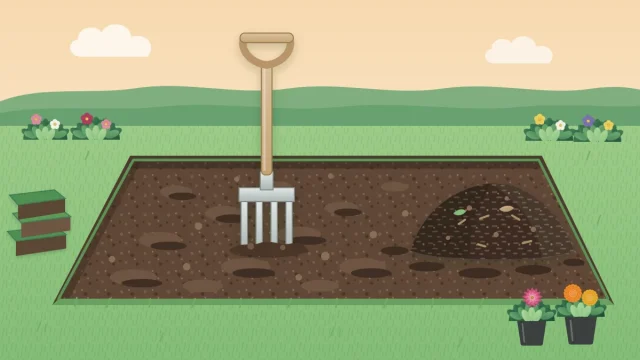
Nearly every soil improves when compost is worked in before planting, and a soil test from a local extension service or lab tells you whether anything else is needed. Clearing grass, loosening the ground and adding compost are covered step by step in how to prepare soil for a flower bed.
Decision three: what your climate allows
Two pieces of local information do most of the work here.
- Your hardiness zone. In the United States, zones are based on average winter low temperatures, and they tell you whether a perennial is likely to survive winter where you live. Look yours up on the USDA Plant Hardiness Zone Map. Gardeners in other countries use their own national systems.
- Your frost dates. The average last spring frost and first fall frost mark the edges of the growing season for frost-tender flowers. They are averages, not promises, so watch the forecast as well.
Because these differ so much from place to place, no single planting calendar fits everyone. In cold-winter regions the main planting rush comes after the last spring frost. In mild-winter and hot-summer climates, the cool season is often the busiest and best time for flowers.
Good to know
Advice from a friend who lives far away, or from a seed packet written for a whole continent, may not match your conditions. A local extension service, a nearby public garden or an experienced neighbor can tell you what does well in your area and when it goes in the ground.
Decision four: annuals, perennials or both
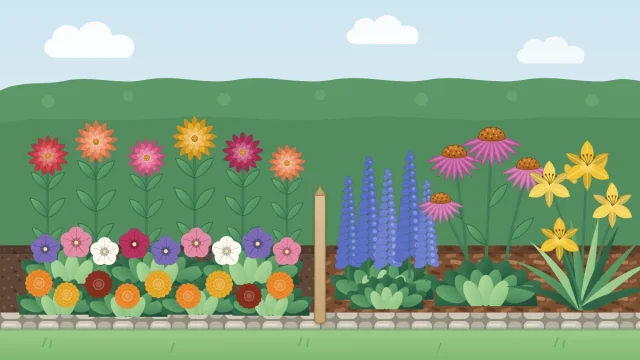
Annuals live for one growing season and usually flower for most of it. Perennials come back for several years where they are hardy, but each kind typically flowers for a shorter stretch. Many first beds mix the two: a few perennials as the long-term framework, and annuals for color from the first summer on. The full comparison is in annuals vs. perennials.
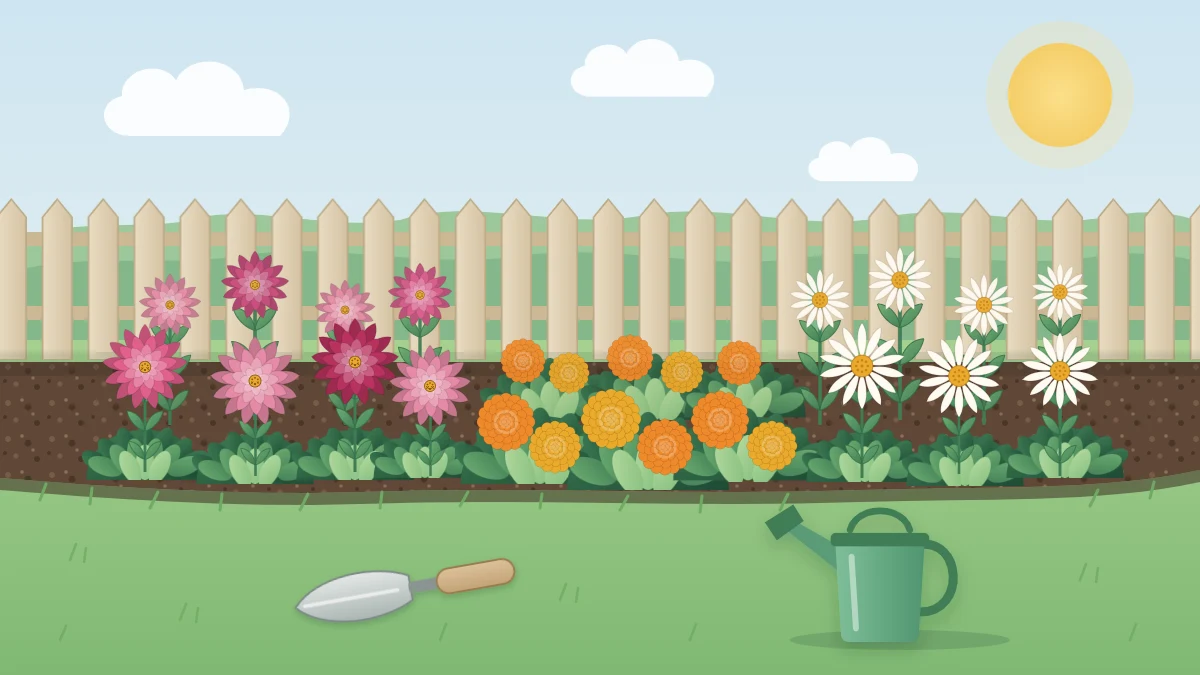
For a sunny first bed, forgiving choices include zinnias and marigolds. Both are warm-season annuals: frost tender, and quick to grow once the soil is warm. Among perennials, purple coneflower is commonly cited as hardy in roughly USDA zones 3 to 8. Confirm the range on the plant tag for the specific variety, and remember that heat and humidity at the warm end matter as well as winter cold.
Whatever you choose, keep the list short. Three to five kinds, each bought as a group, look fuller than one each of fifteen.
A simple first-season sequence
- Watch the light. Note the hours of direct sun before you shop.
- Prepare the soil. Clear grass and weeds, loosen the ground and mix in compost.
- Choose plants for your conditions. Match every tag to your light, and every perennial to your zone.
- Plant at the right time for your area. Tender annuals wait until after your last spring frost, once the soil has warmed. Many perennials tolerate cooler conditions. The technique is in how to plant flowers step by step.
- Water while roots establish. Push a finger 2 to 3 in (5 to 8 cm) into the soil and water when it feels dry at that depth, instead of following a fixed schedule.
- Mulch. A layer of shredded bark or leaves slows evaporation and smothers many weed seedlings. Keep it pulled back a little from stems.
- Deadhead. Removing faded flowers keeps many annuals and some perennials producing new buds.
What to expect in the first year
Annuals give quick results. Bought as transplants, many are in flower within a few weeks of planting and keep going until heat, exhaustion or frost stops them.
Perennials are slower. They often spend the first season building roots, look modest, and fill out over the second and third years. That is normal, and no reason to think you did something wrong.
Expect a few losses too. A plant that struggles tells you something about your site: one possibility is that the spot is shadier than you thought, another is that the soil stays wetter or drier than the plant likes.
Keep notes for next season
A few lines in a notebook are worth more than a good memory. Write down what you planted and where, what flowered longest, what flopped, and when your frosts actually arrived. By next season those notes will be more useful than any general guide, because they describe your garden and nobody else’s.
Frequently asked questions
How big should my first flower bed be?
Small enough to prepare and look after well. A bed of roughly 4 by 8 feet, or a few large containers, gives room for several groups of plants without becoming a chore. Keep it narrow enough to reach the middle from the edge, and place it within easy reach of a hose.
What are the easiest flowers for a first garden?
It depends on your light and climate. For sunny beds, zinnias and marigolds are widely grown warm-season annuals that go out after your last spring frost. For perennials, choose kinds whose hardiness range on the tag includes your zone. A local nursery or extension service can suggest plants that do well in your area.
When should a beginner start a flower garden?
Start observing and preparing soil whenever the ground is workable, and plant according to your local frost dates instead of a fixed calendar. Tender annuals go out after the last spring frost once the soil has warmed. In mild-winter and hot-summer climates, the cool season is often the main planting time.