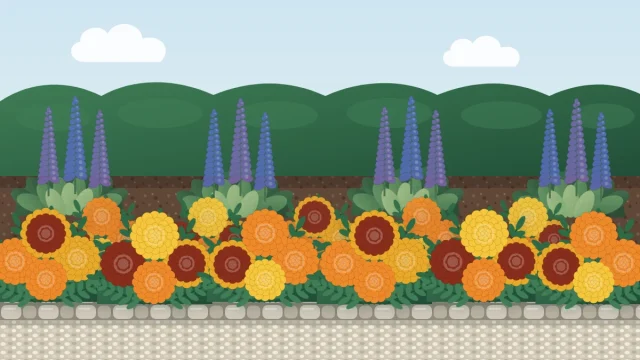
Growing Zinnias: Sun, Soil, Sowing and Care
How to grow zinnias from seed or transplants: the sun, warmth and spacing they need, when to sow after frost, how to water to limit powdery mildew, and how cutting keeps them blooming.

Few flowers give as much color for as little effort as zinnias. They sprout within days in warm soil, bloom within weeks, and keep producing flowers in almost every shade except blue until frost ends the season.
Growing zinnias well comes down to four things: sun, warmth, space and dry leaves. Get those right and the rest is mostly cutting flowers, which the plants answer by making more.
What zinnias are
Zinnias are warm-season annuals native to Mexico and neighboring parts of the Americas. That origin explains their habits: they love heat, they cannot take frost, and they grow fast once the weather is warm.
Sizes vary enormously. Low, mounding types reach roughly 6 to 12 in (15 to 30 cm) and suit edging and pots. Tall cutting types can stand 3 to 4 ft (about 90 cm to 1.2 m) with long stems for the vase. Flowers may be single like a daisy, fully double like a pompon, or somewhere in between. Heights and bloom sizes depend on the variety and on your climate, so check the packet or tag.
Sun, soil and warmth
Zinnias need full sun, meaning at least six hours of direct light a day and preferably more. In shade they grow thin, flower sparsely and stay damp for longer, which invites disease.
Soil can be ordinary. Average garden soil that drains well suits them better than heavy, wet ground or a bed loaded with fertilizer. If water stands on the bed after rain, choose another spot or raise the soil level.
Warmth is the requirement beginners most often overlook. Zinnia seed sown into cold soil tends to rot, and transplants set out during a chilly spell simply stall. For an overview of their needs and a list of types, see University of Wisconsin-Madison Extension.
When to sow or plant
Sow seed or set out transplants only after the danger of frost has passed and the soil has warmed. Because frost dates differ so much from place to place, go by your own average last spring frost date and the feel of the soil, not by what a neighbor in another region is doing.
How you start depends on the length of your warm season:
- Short seasons. Start seed indoors about four to six weeks before your last frost date, or buy transplants, so the plants have time to bloom well before fall.
- Average seasons. Direct sowing is the simplest method and gives sturdy plants.
- Long, warm seasons. Make a second sowing several weeks after the first. Fresh plants take over as the early ones tire, which extends the show.
In frost-free or very hot climates, zinnias are often grown in whichever part of the year is warm without being extreme; a local extension service can tell you the usual sowing windows.
How to sow zinnia seed
Zinnias are among the easiest flowers to sow directly. Rake a weeded bed smooth, sow the seed about a quarter inch (6 mm) deep, cover, firm and water with a gentle spray. Keep the surface moist, and in warm soil seedlings often appear within a week or so.
The full method, from seedbed to thinning, is in our guide on how to sow flower seeds outdoors. If you start indoors, handle the seedlings gently at planting time and disturb the root ball as little as you can, because zinnias dislike rough transplanting.
Spacing and air movement
Spacing depends on the variety. As a rough guide, compact types are often set about 6 to 8 in (15 to 20 cm) apart and tall types 12 to 18 in (30 to 45 cm) apart, but the packet for your variety is the better authority. Thin direct-sown seedlings to that distance once they have true leaves.
It is tempting to leave zinnias crowded, since a thick row looks lush early on. Resist it. Air moving between the plants dries the leaves, and that matters a great deal for this flower. More on reading tag distances is in our guide to flower spacing.
Watering and powdery mildew
Water at the base of the plants, not over the top, and do it in the morning where you can so any splashes dry quickly. Young plants need steady moisture while they root. Established zinnias cope with short dry spells, so check the soil a few inches down and water deeply when it feels dry there instead of following a fixed routine.
The most common zinnia problem is powdery mildew, a white or gray dusty coating on the leaves. It usually shows up late in the season and is especially common in humid weather. Plants that have space and leaves that stay dry are less prone to it. You can also look for varieties described as mildew resistant, and remove badly affected leaves.
Good to know
Mildew late in the season is mostly a cosmetic problem, and the plants often keep flowering through it. If you are unsure whether what you see is mildew or something else, your local extension service can help with identification.
Pinching, cutting and deadheading
For bushier plants with more stems, pinch them once while they are young. When a plant is about 8 to 12 in (20 to 30 cm) tall, snip off the top of the main stem just above a pair of leaves. It delays the first flower slightly, then two or more side stems grow in place of one.
After that, cutting is the main job. Zinnias respond to cutting by branching, so every stem you take for a vase prompts more buds. Cut just above a pair of leaves, and choose flowers on stiff stems: hold the stem several inches below the bloom and give it a gentle shake. If the stem stays rigid, the flower is ready; if it droops and wobbles, leave it a few more days.
Remove faded flowers you did not cut, too. A plant allowed to set seed slows its flowering. Technique and timing are covered in our guide to deadheading flowers.
Butterflies and saving seed
Butterflies and other pollinators visit zinnia flowers readily. Single and semi-double flowers, with an open yellow center, are easier for them to feed from than tightly double ones.
To save seed, leave a few of the best flowers to dry brown on the plant near the end of the season, then pull the heads apart and store the arrow-shaped seeds somewhere dry. Seed saved from hybrid varieties may not match the parent plant, so expect some surprises in color and form.
Frequently asked questions
Do zinnias come back every year?
No. Zinnias are frost-tender annuals, so the plants die with the first fall frost and do not regrow. In some gardens, dropped seed sprouts the following year once the soil warms, but the results are unpredictable. Most gardeners sow fresh seed or set out new plants each season.
Why are my zinnia leaves turning white?
A white or gray powdery coating is often powdery mildew, which is common on zinnias late in the season and in humid weather. Other causes are possible, so check closely. Give plants more space, water at the base, remove the worst leaves and ask your local extension service if you are unsure.
Should I pinch zinnias?
Pinching is optional but useful for taller varieties. Snipping the top of a young plant just above a pair of leaves encourages side stems, giving a bushier plant with more flowers on longer stems. It delays the first bloom a little. Compact edging types usually branch well without it.